

Wins for Dialog Axiata and George Steuart over the weekend
Pakistan, Sri Lanka primed for more experimentation in Rawalpindi
Jay Shah re-elected as ICC chairman for second term
Wesley chase history against formidable Mahinda
How Jayasuriya brought the best out of Mendis with Lord’s snub
Armies are increasingly investing in artificial intelligence (AI) to gain an advantage on the battlefield. In modern warfare, victory often depends on technological superiority, particularly the ability to deploy weapons with greater precision, speed and destructive capability. Consequently, countries are engaged in a race to enhance their military capabilities, strengthen deterrence and improve their bargaining power in global politics.
The United States, China and Russia dominate global military power, possessing formidable destructive capabilities. The United Kingdom, Germany, France and other European countries are also competing to strengthen their military capabilities and strategic influence. Even countries with relatively limited economic resources are seeking to modernise their armed forces. Israel, Japan, North Korea and India, for instance, have distinctive military capabilities and strategic priorities. Consequently, military structures, doctrines and operational approaches differ according to national resources, strategic objectives and technological capabilities.
Russia’s military applications of AI have attracted considerable attention because of the opportunity to observe technological developments during its war in Ukraine. The conflict has become an important testing ground for military technologies, including drones, automated systems and AI-assisted battlefield applications.
Countries leading military AI integration
Several countries are advancing the integration of AI into military operations to improve efficiency, decision-making and battlefield capabilities.
The United States is widely regarded as a leader in military AI integration, applying advanced technologies across several operational domains.
• Project Maven: Uses AI to analyse drone footage and other intelligence, facilitating faster identification of potential targets and the processing of actionable information.
• Autonomous drones: The US Air Force and Navy are developing and testing autonomous drones capable of coordinated operations and swarm behaviour.
These systems analyse battlefield information and assist commanders in assessing situations and developing operational options.
Ground robots are employed, or tested, for reconnaissance, logistics and other support functions.
RC F22 Model plane made by an enthusiast which has a 200 Kmph speed
China has rapidly expanded its military AI applications, particularly in autonomous systems, surveillance and cyber warfare.
• Sharp Sword UCAV: An advanced stealth unmanned combat aerial vehicle designed to operate with increasing levels of autonomy.
• AI-enabled aircraft: Reports indicate that AI-assisted capabilities are being explored for threat detection, information processing and decision-making in advanced Chinese aircraft.
• Surveillance systems: AI-powered facial recognition and other surveillance technologies are used to collect intelligence and identify individuals.
China is developing coordinated groups of small drones for surveillance and military operations.
Russia is actively developing AI applications for unmanned platforms, battlefield information processing, command systems and cyber warfare. Its war in Ukraine has provided an opportunity to test and adapt military technologies under operational conditions.
Examples include autonomous or AI-assisted drones, robotic combat vehicles and soldier augmentation systems designed to improve battlefield awareness.
Israel is recognised for its advanced military technology and integration of AI into defence systems.
• Iron Dome: Uses sophisticated algorithms to identify, track and assess incoming rockets and support interception decisions.
• Cyber defence: AI-assisted systems are employed to protect critical military infrastructure and support cyber operations.
• Autonomous vehicles: Israel is developing aerial and ground platforms for surveillance and military applications.
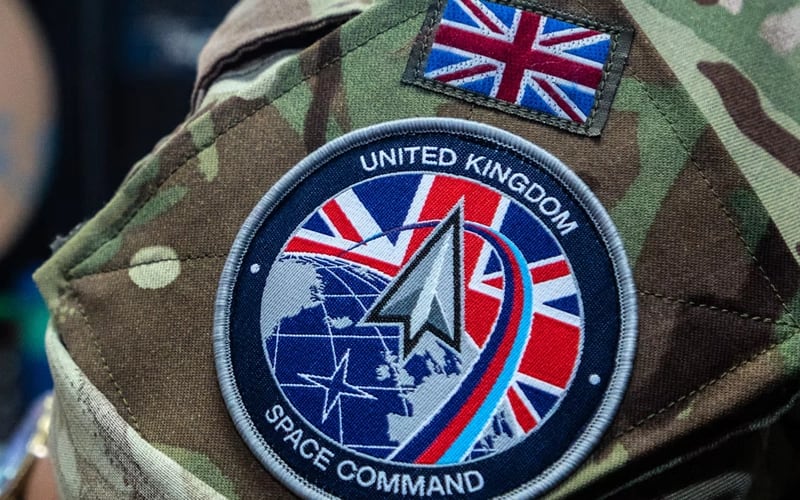
The United Kingdom is advancing military AI capabilities through modernisation programmes, research and international partnerships.
• Project DragonFire: A collaborative programme developing directed-energy weapons technology, alongside broader efforts to modernise military capabilities.
Technologies designed to improve battlefield awareness and decision-making.
• Surveillance drones: AI-assisted systems for reconnaissance, information processing and military support.
These developments demonstrate how major military powers are adapting AI and robotics to their respective strategic requirements. Autonomous drones, AI-assisted command systems, ground robots and intelligent soldier equipment are increasingly important components of modern military operations.
Drone and robotics technology is not unfamiliar to Sri Lanka. Schoolchildren are already demonstrating considerable ingenuity in designing and manufacturing remote-controlled drones of different sizes and speeds. Some are capable of reaching speeds of approximately 200 kmph and performing impressive aerobatic manoeuvres.
This demonstrates that technical knowledge and innovative capabilities exist locally, even without extensive formal instruction. Such expertise could be developed further through structured programmes involving universities, engineering institutions, the armed forces and the private sector.
The question is why Sri Lanka’s aircraft engineers and other technical specialists have not made greater progress in developing indigenous drone technology for military and other specialised applications. Drone warfare has already demonstrated the importance of unmanned aerial vehicles in reconnaissance, logistics, cargo handling and combat operations.
Robotics presents a similar opportunity. Schoolchildren and university students are building robots and displaying their capabilities at exhibitions throughout the country. However, many promising innovations remain at the experimental stage and have yet to be commercialised.
Robotic tractors and vehicles, for instance, could be developed for applications such as mine clearance, casualty evacuation, cargo transportation and other hazardous battlefield tasks. Such systems could reduce the exposure of soldiers to danger while improving operational efficiency.
AI Ground Robots of Boston Dynamics
Sri Lanka should therefore move beyond a predominantly import-oriented approach and explore ways of developing, testing and commercialising indigenous innovations. Establishing a drone regiment, supported by local manufacturing and developing ground robotics for military applications, should not be considered an unrealistic ambition.
Russian military applications of AI
Artificial intelligence is transforming military operations by facilitating faster information processing, improving battlefield awareness and supporting autonomous and semi-autonomous systems. Russia has been integrating AI into several areas of military activity in an effort to enhance operational efficiency and reduce risks to its personnel.
Autonomous unmanned aerial vehicles
Russian military drones are being developed and deployed for reconnaissance, surveillance and strike missions. Some systems are reported to incorporate AI-assisted image recognition, navigation and target identification capabilities.
The Geran series and Molniya drones have attracted attention in connection with the development of increasingly autonomous unmanned systems. However, the precise extent of AI integration and autonomous decision-making in particular platforms is not always independently verifiable.
Russia has also explored robotic systems for military support and combat-related functions.
Platforms such as the BR-1 and BRG-1 have been associated with applications, including mine-laying, reconnaissance and casualty evacuation. Such technologies could potentially operate in dangerous environments, reducing the risks faced by human personnel.
AI-assisted equipment is also being developed to improve individual soldiers’ situational awareness.
The Soratnik smart helmet, for example, has been described as a prototype incorporating information from cameras and other battlefield sources. Such systems could provide soldiers with information about the location of friendly forces and potential threats, helping them make better-informed decisions.
AI can support military commanders by processing large volumes of information from satellite imagery, drones, ground sensors and other sources.
Automated battlefield management systems can assist in assessing operational situations, coordinating resources and evaluating possible courses of action. Such applications can improve the speed and quality of decision-making while reducing the workload of commanders and staff.
Cyber warfare and information operations
Russia regards AI as an important component of cyber warfare and information operations. AI-assisted tools can support intelligence collection, information analysis, cyber defence and offensive cyber activities.
These applications demonstrate that military AI extends well beyond autonomous weapons. Information processing, communications, logistics and decision support are equally important areas of development.
Military AI also presents serious challenges.
Autonomous decision-making raises questions about accountability, particularly when systems cause unintended consequences or civilian casualties. Reliability and cybersecurity are essential because adversaries may exploit vulnerabilities in AI-enabled equipment.
There is also a growing need for international norms and regulatory frameworks governing military AI, particularly autonomous weapons, to ensure that technological advancement does not undermine humanitarian principles and international law.
Although Sri Lanka cannot compete with major military powers in terms of resources, it could introduce selected AI and robotics applications without enormous expenditure. The country’s existing technical expertise, educational institutions and demonstrated interest in drone and robotics technology provide a foundation for such initiatives.
The Sri Lankan Army, often described as a first-generation army in terms of technological capabilities, could benefit from carefully selected modernisation programmes. These need not involve expensive, sophisticated weapons systems at the outset.
The immediate requirement is visionary leadership capable of identifying promising innovations and bringing together military personnel, engineers, scientists and entrepreneurs. Relevant regiments and technical units could be upgraded with expertise in mechatronics, robotics and related disciplines to support the operational requirements of the armed forces.
A phased approach, beginning with reconnaissance drones, logistics systems, ground robotics and AI-assisted information processing, could provide practical experience while developing local capabilities. Indigenous manufacturing and research should receive priority wherever feasible.
Sri Lanka has an opportunity to demonstrate that a relatively small military can achieve meaningful technological progress through innovation, collaboration and strategic foresight. Developing selected AI-enabled capabilities could enhance operational effectiveness, reduce risks to personnel and strengthen the country’s defence preparedness.
I hope this article will encourage military strategists, policymakers and technical specialists to recognise the potential of indigenous innovation and initiate a serious discussion on developing Sri Lanka’s military technological capabilities.
Russia’s experience, together with developments in other countries, offers useful lessons. Sri Lanka should examine these developments critically and adapt suitable technologies to its own requirements rather than simply replicate foreign military models.
The ultimate objective should be to make the battlefield smarter, improve the effectiveness of the armed forces and protect the lives of military personnel, while ensuring that technological advancement remains consistent with responsible military conduct.
(The author can be contacted at [email protected] .)
All News Advertisement Related Topics: Up Next Paththuwe Walauwa, Galwala Road, Hambantota
Balancing security and rights: Evolution of Sri Lanka’s anti-terrorism framework
Your email address will not be published. Required fields are marked *
Save my name, email, and website in this browser for the next time I comment.
Sri Lanka’s 2027 Budget, presented to Parliament last week, marks a decisive rhetorical pivot from crisis stabilisation to structural transformation. It is ambitious, investment-heavy, and socially conscious. But a careful review of the fiscal framework—including revenue projections, expenditure allocations, and financing assumptions—suggests that the Budget’s credibility rests on three unresolved questions: Can the Government raise enough revenue? Can it spend what it has allocated? And can it resolve the SOE losses that drain the Treasury?
This article examines the Budget’s key strengths, its structural weaknesses, and the specific refinements needed to bridge the gap between vision and execution.
Macro-Fiscal Picture: Discipline Maintained, Revenue at Risk
The Budget’s headline numbers are carefully calibrated. Total revenue and grants are projected at Rs. 6,180 billion, yielding a revenue/GDP ratio of 15.8%—below the Government’s own stated medium-term floor of 16%. The deficit is targeted at 4.5% of GDP (including the Ditwah supplementary), with a primary surplus of 2.3% of GDP. Public investment is set at 5.1% of GDP, and interest payments remain the single largest expenditure line at Rs. 2,643 billion.
These are credible targets on paper. But the revenue side is fragile. Annex I of the Budget estimates a net revenue loss of Rs. 28.4 billion for 2027, driven by personal income tax threshold adjustments, CESS reductions, and VAT exemptions. The revenue/GDP ratio falls from 16.6% in 2025 to 15.8% in 2027—precisely the wrong direction if the Government intends to reach 20% of GDP in the long term.
This is the Budget’s central contradiction: it grants tax relief while promising a revenue-led transformation.
To bridge this gap, the government should publish a medium-term revenue mobilisation roadmap that goes beyond compliance improvement and base broadening. Specifically, it should accelerate the introduction of a modernised property tax or land value tax, introduce wealth and luxury consumption taxes, and systematically rationalise the remaining inefficient tax exemptions. These are politically difficult but fiscally necessary.
A transparency issue also needs immediate attention. Annex III lists additional bank borrowing of Rs. 260 billion for the Ditwah supplementary, while Annex IV states that the supplementary will be financed through the cash buffer. These cannot both be true. The Government must explicitly reconcile this discrepancy in Parliament to maintain investor and IMF confidence.
Fiscal Triggers for External Shocks
Given the Middle East conflict, Strait of Hormuz fuel risks, and the El Niño peak expected in February 2027, the Budget should also establish explicit fiscal circuit-breakers. If revenue shortfalls exceed 5–10%, lower-priority capital projects should be automatically staggered or paused. The allocation of Rs. 5 billion for El Niño preparedness is welcome but small relative to the potential damage—Cyclone Ditwah alone caused an estimated USD 3.4 billion in damage and losses.
Capital Expenditure: Ambitious but Overstretched
The Budget allocates Rs. 1,750 billion (4.5% of GDP) in standard public investment, plus Rs. 250 billion in Ditwah reconstruction. Major allocations include:
· Rs. 251 billion for highways, expressways, and railways
· Rs. 80 billion for first-phase railway electrification
· Rs. 77 billion each for water and irrigation
· Rs. 131 billion for health capital expenditure
· Rs. 35 billion for education digitalisation and infrastructure
These are the right priorities. But spreading resources across hundreds of new projects—while existing projects already suffer from land acquisition delays, procurement bottlenecks, and contractor capacity constraints—risks severe under-execution. The Budget promises “accountable institutions, outcome indicators, cash-flow plans and transparency,” but those mechanisms are not yet visible.
The Government should implement a Project Triage and Readiness Filter, categorising all capital projects by procurement status, land acquisition completion, and economic rate of return. Low-readiness projects should be paused or staggered until high-priority ones—particularly grid stability, disaster reconstruction, and water supply—are well underway. A quarterly public implementation dashboard should track every major project’s institution, funding source, milestone timeline, and outcome indicators.
SOE Reform: The Strongest Agenda, the Weakest Timelines
The legal and institutional reform agenda is the most credible part of the Budget. It includes:
· The Rescue, Rehabilitation and Insolvency Act
· The Microfinance and Credit Regulatory Authority
· The Public-Private Partnership (PPP) Act
· The State-Owned Business Enterprises Management Bill, with a holding company for 34 SOEs
· The National Single Window for Trade and Investment
If implemented, these reforms would materially improve the investment climate, trade facilitation, and fiscal transparency. But many items remain at draft stage, with the Attorney General, or awaiting Cabinet and Parliament.
Two specific gaps stand out. First, the government should publish a “Must-Pass” legislative calendar for the first half of 2027, ensuring that the SOE Management Bill, PPP Act, and Upper Watershed Area Management Authority Act are enacted swiftly. Second, it must set binding, time-bound deadlines for resolving the chronic losses at SriLankan Airlines (Rs. 528 billion accumulated) and Mattala Airport (over Rs. 70 billion). These institutions continue to drain the Treasury while solutions remain at the EOI/RFP stage.
Social Protection: Inclusive Intent, Uneven Incidence
The Budget is socially sensitive. It allocates Rs. 230 billion for Aswesuma and related allowances, increases disability and kidney allowances to Rs. 12,500, and provides Rs. 25 billion for the Praja Shakthi rural development programme. These are welcome measures.
But the distributional impact is mixed. The reduction in the Special Commodity Levy on sprats and Maldive fish helps consumers, but the counter-balancing increase on imported sugar hurts lower-income households. The Government should consider shielding vulnerable groups by linking sugar tariff adjustments directly to Aswesuma recipient verification.
More broadly, the government should publish a rapid distributional impact assessment of the combined tax reliefs, utility and fertiliser subsidies, and allowance hikes. This would clarify how informal workers and rural communities fare relative to formal-sector taxpayers—and ensure that the Budget’s inclusive rhetoric is matched by measurable outcomes.
Digital Transformation: Strong Design, Sequencing Risk
The digital agenda is one of the Budget’s best-designed sections. It includes:
· The GovTech institution and Lanka Government Cloud 3.0
· The Digital Economy Bill and Cyber Security Bill
· A National AI Centre of Excellence
· Digital ID rollout and expansion of presence-less services
· Broadband vouchers for 750,000 school students
· Rs. 10 billion in new digital proposals, with Rs. 28.5 billion allocated to the Ministry of Digital Economy
The risk is sequencing. Before scaling large-scale data integration across Divisional Secretariats, health platforms, and tax systems, the Government must ensure that the Cyber Security Authority and strengthened privacy safeguards under the Data Protection Authority are fully operational. A data breach or systemic failure during the early rollout of Digital ID would undermine public trust and set the agenda back by years.
External Sector: The Greatest Source of Uncertainty
The external position remains the most fragile part of the outlook. The current account moved from a USD 1,853 million surplus in the first nine months of 2025 to a USD 420 million deficit in the same period of 2026. Fuel imports rose to USD 4,487 million by September 2026. Reserves are above USD 7 billion , but external shocks—oil prices, shipping costs, and climate disasters—remain a major risk.
The IMF’s Extended Fund Facility concludes in March 2027. The Government has appointed a committee to examine a successor programme. That is prudent. But the transition period introduces policy uncertainty that could affect investor confidence and external financing flows.
The 2027 Budget is a strong vision document with moderate fiscal credibility and high implementation risk . It correctly identifies the next stage of Sri Lanka’s recovery: investment, digitalisation, energy transition, export competitiveness, and social justice. But it does not yet show how it will finance all of this without slipping back into deficit pressure.
The Government has the vision. It now needs:
· A revenue mobilisation roadmap to secure 16%+ of GDP
· A project readiness filter and public delivery dashboard
· A legislative calendar for must-pass reforms
· A distributional impact assessment of tax and welfare measures
before large-scale data integration
If executed well, this Budget could mark a genuine turning point. If executed poorly, it risks becoming an over-allocated wish list. The next 12 months—especially revenue collection, Ditwah reconstruction, SOE reform, and digital and energy delivery—will determine which it becomes.
This article is based on a review of the Budget Speech 2027 and supporting annexes. All figures are as reported in the Budget documents.
The writer is Chandra Embuldeniya, the Founding Vice Chancellor of the Uva Wellassa University (retired) and a Past President of the National Chamber of Commerce of Sri Lanka
Continue Reading Features Four generations,160 years and a lifetime of memories at Methodist College Published
Some school memories fade with time. Others become family heirlooms, carefully preserved in old photographs, prize books and stories passed down from one generation to the next.
For Desana Plohman, Methodist College is not simply the school she attended. It is a remarkable family legacy, stretching across more than a century and embracing four generations of women whose lives were shaped by the same institution.
As Methodist College celebrates its 160th anniversary, Desana has a particularly compelling story to tell.
Her family’s association with the school reaches back to the 1890s, when her great-grandmother, Ellinor Blacker, was a student at what was then known as Kollupitiya Girls High School.
More than 130 years later, that connection remains alive, not merely in family recollections but in treasured possessions that have survived the passage of time.
Desana’s grandmother, standing second from left. Miss Shire seated in the centre
Among them are five prize books awarded to Ellinor between 1892 and 1896. Their pages carry a story of another era, when the school was still in its formative years and generations of young women were beginning their educational journeys within its walls.
For Desana, these books are far more than family memorabilia. They are tangible links to a history she has inherited and proudly continues.
Her grandmother, Beryl Fernando, was the next to walk the corridors of Methodist College, attending during the 1920s as a boarder. She, too, carried away memories that remained vivid throughout her life, along with friendships that endured long after her schooldays were over.
Beryl often spoke of her experiences at the school and remembered Miss Choate, Miss Park and Miss Shire. The latter holds a special place in Methodist College history for establishing the first Colombo Guide Company at the school.
A prize book awarded to Beryl in 1923 is another of Desana’s cherished possessions. Together, these old volumes offer a fascinating glimpse into the lives of two generations who experienced Methodist College at very different points in its history.
The family connection continued through Desana’s mother, Diana Peries, who attended the school during the 1950s.
By the time Desana herself entered Methodist College in 1981, she was following a path already travelled by her great-grandmother, grandmother and mother.
She remained a student until 1994, a period she recalls with immense affection.
“Our school days were so much fun!” she says, summing up an experience that clearly went far beyond lessons and examinations.
Her schooldays were filled with friendships, laughter, activities and the kind of experiences that make childhood and adolescence unforgettable.
Yet among the many memories, one particular Friday remains etched in her mind.
In 1993, Desana was appointed Head Prefect on her 17th birthday. As coincidences go, it was an extraordinary one. Her birthday fell on the final Friday of the school year, making the occasion even more memorable.
“One of my favourite memories was being appointed Head Prefect on my 17th birthday,” she recalls.
She walked into the school church carrying the traditional school oil lamp and took her Head Prefect’s oath.
It was a birthday celebration unlike any other: a moment of personal achievement, institutional tradition and youthful excitement coming together under one roof.
For a teenager, being entrusted with the responsibility of leading the student body was already a significant honour. To assume that responsibility on her birthday made it an occasion she would remember for the rest of her life.
There was another special dimension to the year. 1993 was the first year of Priyani Fernando as Principal of Methodist College.
Desana remembers beginning each school morning with a visit to the Principal’s office, where she would spend a few minutes discussing the day’s responsibilities and activities.
“I would start each morning in her office, spending a few minutes discussing the day’s tasks,” she says.
Those brief morning conversations became part of her daily routine as Head Prefect, offering an opportunity to discuss the work ahead and reflect on the responsibilities that came with the position.
Her appointment followed another important milestone in 1991, when she became a President’s Guide.
For Desana, however, the distinction of holding these positions was only one part of the Methodist College experience. What remains equally precious are the friendships, the shared adventures and the everyday moments that made those years so enjoyable.
There is a certain magic in looking back at one’s schooldays through the perspective of adulthood. The classrooms, the school church, the familiar routines and the faces of teachers and friends acquire a significance that perhaps only time can fully reveal.
Desana’s memories are also inseparable from the remarkable continuity of her family’s relationship with the institution. Her schooldays were not an isolated chapter but part of a much longer narrative that began in the nineteenth century.
Four generations of women, separated by decades, yet united by one school.
The journey did not end with her departure from Methodist College. Desana went on to study for a Bachelor’s Degree in Law at the University of Colombo before moving to Canada to pursue a Master’s Degree in Law, specialising in Human Rights.
Today, she works as a Provincial Policy Consultant at Shared Health Manitoba, the government health authority in the Canadian province of Manitoba.
Her professional journey has taken her from Colombo to the world of legal studies, human rights and provincial public policy in Canada. It is a considerable distance, geographically and professionally, from the school where she once carried the oil lamp and took her oath as Head Prefect.
Yet the attachment to Methodist College has never been diminished by distance.
Indeed, as the institution celebrates its 160th anniversary, her story offers a reminder that the true legacy of a school cannot be measured solely through its buildings, academic achievements or historical milestones.
Its deeper worth is reflected in the lives it touches, the confidence it instils, the friendships it creates and the traditions that families carry forward.
For Desana, the five prize books awarded to Ellinor Blacker in the 1890s and the 1923 prize book belonging to Beryl Fernando are among the most meaningful reminders of that legacy. They connect her directly to women whose school experiences took place in a very different world, yet whose affection for Methodist College became part of the family’s collective memory.
Her mother’s years at the school in the 1950s added another chapter, while Desana’s own experiences during the 1980s and early 1990s brought the family story into a new generation.
There is also something particularly poignant about the fact that many of her grandmother’s closest and lifelong friends came from Methodist College. The friendships formed there did not end with the ringing of the final school bell. They became relationships that accompanied women throughout their lives.
That, perhaps, is one of the greatest gifts an educational institution can offer.
As Methodist College marks 160 years, Desana Plohman’s story is a celebration of continuity, belonging and the enduring power of education.
Reflecting on the generations that preceded her, she says: “Four generations of my family have been Methodist College students.”
And she has no doubt about the lasting place the institution holds in their lives.
“All of us have cherished the memories of the time we spent there,” she says.
From Ellinor Blacker in the 1890s to Beryl Fernando in the 1920s, from her mother’s schooldays in the 1950s to Desana’s own years between 1981 and 1994, the Methodist College connection has remained an extraordinary family tradition.
And somewhere within that long history, one Friday in 1993 stands out: a 17-year-old girl entering the school church with an oil lamp, ready to take her oath as Head Prefect.
It was her birthday, the final day of the school year and the beginning of a memory that would last a lifetime.
The school has celebrated 160 years. For Desana and her family, however, its history is also a living story — one that began with a great-grandmother’s prize books and continues through four generations of cherished memories.
Continue Reading Features From Golden Triangle to Bay of Bengal: Seizures, shared routes and diplomatic work ahead Published
By Mahil Dole Senior Superintendent of Police (Retd.)
Recent Seizures and Operational Results
The recent interceptions by the Sri Lanka Navy of substantial loads of methamphetamine and heroin in southern waters have underlined both the persistence of the trade and the capacity of Sri Lankan agencies to disrupt it. On 13 November a local multi-day fishing trawler was intercepted carrying roughly 59 kilograms of heroin and 43 kilograms of crystal methamphetamine, valued at more than Rs 1.5 billion. Parallel actions in the same period yielded other mixed consignments in the 70-to-130-kilogram range. These results sit alongside a 471-kilogram methamphetamine detection in a container at the Port of Colombo, earlier beach recoveries exceeding 500 kilograms, and cumulative Navy and Coast Guard seizures under the national anti-drug mission that already exceed Rs 74 billion in street value for 2026 alone. The operations have been intelligence-led, involving the State Intelligence Service and the Police Narcotics Bureau, and have demonstrated that prolonged surveillance and inter-agency handover can remove large volumes before they reach the domestic market.
The Golden Triangle route through Tamil Nadu
These successes form part of a wider regional flow. Methamphetamine produced in the Golden Triangle, principally Myanmar, with contributions from Laos and Thailand, moves into India across the Northeast border, often via Moreh in Manipur, then by rail and road to Tamil Nadu’s coast. From points such as Nagapattinam (roughly four hours by boat from northern Sri Lankan waters), Rameswaram and Tuticorin, fishing vessels complete mid-sea transfers across the Palk Strait and Gulf of Mannar. The same short distances have long served other smuggling; they now carry high-value synthetic drugs that feed Sri Lanka’s domestic demand and continue onward to Australia, New Zealand, Malaysia and the Maldives. Indian agencies have recorded the trend clearly. In mid-October the Directorate of Revenue Intelligence seized 137 kilograms of crystal methamphetamine in Nagapattinam, assessed as intended for transfer to Sri Lanka and valued above Rs 100 crore. Four arrests followed, including a local political functionary. Around the same time, officers in Ramanathapuram recovered 35 kilograms of methamphetamine and 50 kilograms of cannabis oil prepared for the Rameswaram route. Enforcement Directorate actions in Chennai and Madurai have targeted related money-laundering networks.
Tamil Nadu’s concerns and shared pressures
Tamil Nadu’s experience illustrates the shared character of the problem. Coastal communities face recruitment for transport and storage. Political attention has followed the larger seizures, with opposition figures questioning responses and the state police leadership issuing directives that hold local inspectors accountable for drug-related deaths or major central-agency finds within their jurisdictions. These reactions reflect genuine local strain as well as the difficulty of policing a high-volume fishing corridor. For Sri Lanka the implication is straightforward: the same routes that Indian agencies are interdicting continue to supply both the island’s market, where methamphetamine seizures have risen sharply, and its transit role.
Domestic Social Costs and Internal Challenges
Inside Sri Lanka the social consequences remain visible. August-to-October 2026 data showed substantial heroin and methamphetamine seizures alongside tens of thousands of cases. Young people, including teenagers and smaller numbers of children, continue to appear in the figures. Property crime linked to the need for money, family breakdown and school drop-outs form a secondary layer of harm that places pressure on policing, health services and education. Recent remarks by the President on the emergence of a drug-funded “shadow state” capable of influencing officials and institutions recognise that the challenge has moved beyond ordinary criminality. Large internal raids under the Ratama Ekata mission have produced hundreds of thousands of arrests and multi-ton cumulative seizures, yet the organisers who direct consignments from overseas, figures linked to Dubai, Japan, Georgia and elsewhere, require sustained diplomatic and legal follow-up. Some already face Red Notices or are in foreign custody; converting those actions into network disruption depends on rapid forensic analysis, asset recovery and mutual legal assistance.
Diplomatic channels are therefore central. Existing Director General-level talks between India’s Narcotics Control Bureau and Sri Lanka’s Police Narcotics Bureau, involving the Indian Coast Guard, Tamil Nadu Police and Sri Lankan Navy and Customs, have produced intelligence exchanges and joint maritime results, including Indian naval support for large ‘ICE’ seizures in the Arabian Sea, based on Sri Lankan information. Arrests by India’s National Investigation Agency of Sri Lankan nationals from refugee facilities in Tamil Nadu further show the value of case-level cooperation. Expanding working-level, real-time sharing focused on mid-sea patterns and specific boat networks would raise the cost of using the corridor without requiring prior resolution of older fisheries or political sensitivities.
BIMSTEC offers an additional framework that Sri Lanka is already using. At the inaugural BIMSTEC Home Ministers’ Meeting, in New Delhi, in October 2026, Public Security Minister Ananda Wijepala represented Sri Lanka and highlighted the Ratama Ekata programme while calling for stronger information-sharing and practical collaboration against drug trafficking and related transnational threats. The resulting Delhi Declaration explicitly lists drug trafficking among the priorities for enhanced regional cooperation. Separately, Sri Lanka has been designated the lead country for public health cooperation within BIMSTEC. It recently hosted the first BIMSTEC Health Ministers’ Meeting in Colombo, with Health Minister Dr Nalinda Jayatissa elected Chair. While the health track focuses on disease surveillance, pandemic preparedness and related issues, it provides a natural platform for linking prevention, treatment and rehabilitation efforts across member states, work that complements enforcement and addresses the demand side that sustains the trade.
Using Regional Responsibilities for Anti-Drug Action
These appointments and responsibilities give Sri Lanka a practical diplomatic opening. BIMSTEC membership includes a source-adjacent country (Myanmar), a major transit state (India) and several others affected by the same maritime routes. Using the Home Ministers’ channel to press for more regular operational intelligence exchanges on Golden Triangle flows, and using the public-health lead role to coordinate prevention and rehabilitation standards, would align regional mechanisms with the operational results already being achieved at sea. The same platforms can support capacity-building on maritime domain awareness and financial investigation, areas where larger partners have relevant experience.
Further improvement requires domestic as well as diplomatic effort. Forensic and analyst capacity must keep pace with the volume of large seizures so that laboratory delays do not weaken prosecutions or asset freezes. Financial intelligence and recovery teams need resources to target overseas organisers. Community engagement with the fishing sector, protected tip-off mechanisms and clear performance measures, covering not only kilograms seized but also the speed of case processing and the number of high-level networks disrupted, would help convert individual detections into sustained supply reduction. Public confidence depends on seeing that successful interdictions lead to convictions and the restraint of proceeds.
The recent Navy, Customs and partner-agency results deserve recognition. They reflect professional planning, inter-agency coordination and a willingness to act on intelligence in demanding conditions. They also show that international partners are prepared to assist when information is shared promptly.
Converting these gains into lasting reductions in the availability of methamphetamine and heroin will depend on treating diplomacy as an operational tool. Closer working relationships with Indian and Tamil Nadu counterparts, fuller use of BIMSTEC’s security and public-health tracks, faster domestic processing of major cases, and continued pressure on overseas figures offer the most direct path forward. The social and security costs of slower progress remain high, particularly for the young people who continue to appear in both the seizure statistics and the arrest figures. The tools, the partnerships and the regional responsibilities now exist; the task is to use them with greater consistency and speed.
( This analysis is offered in the interest of national security, institutional reform and public safety)
The writer is a retired Senior Superintendent of Police, former head of the counter terrorism desk at the state intelligence service, a former member of the Sri Lanka Wakfs Board, and the author of “Security Beyond Enforcement: Practical Approaches for a Safer Nation” (2026). [email protected]
Monks defy court order as protest over A’pura development plan intensifies
Devananda to hand back Jaffna shops he held for 30 years to their owners
Dialog maintains growth momentum in Q3 2026, contributes Rs 45.1 bn to taxes
Anuradhapura sacred area development plan
Five dead over 50 injured in Rambewa bus collision
Four monks in custody after Ruwanweli Seya brawl
Fighting crime while safeguarding democracy now and in the future
Copyright © 2020 Upali Newspapers (Pvt) Ltd. Solution by LankaCom Privacy Policy

Loading comments…