About Us Advertise Careers Contact Us Privacy Policy Community Guidelines
Locating… 13°C English WhatsApp Alerts Email Alerts
BREAKING NEWS
Pakistan crush Sri Lanka in second Test to win series - France 24 Thousands of non-academic workers in Sri Lankan universities strike over government’s refusal to meet pay demands - World Socialist Web Site APOD: 2026 November 20 – V-G-R The Stormy Southwest Pacific Sri Lanka Raises Policy Rate to Ensure Inflation Reaches Target - Bloomberg.com Live coverage: SpaceX to launch classified payload for the U.S. Space Force Better together: How two metals and one ink are reshaping printed energy storage - Tech Xplore Sutherland ruled out of Sri Lanka tour; Knott and Learoyd called up - Cricinfo Pakistan romps to eight-wicket win over Sri Lanka for its first test cricket series win in 2 years - myMotherLode.com Danish Soldiers Are Sneaking Starlink Terminals into Greenland
SPACEFLIGHT

APOD: 2026 November 20 – V-G-R

Lanka Hit News • Nov 20, 2026 · 3h ago • 1 min read
Share:

APOD Science APOD APOD: 2026 November… Today’s APOD Archive Submissions Index Search Calendar RSS Education About Discuss   APOD Astronomy Picture of the Day Discover the cosmos! Each day a different image or photograph of our fascinating universe is featured, along with a brief explanation written by a professional astronomer. V-G-R Explanation: On November 17, […]

Discover the cosmos! Each day a different image or photograph of our fascinating universe is featured, along with a brief explanation written by a professional astronomer.

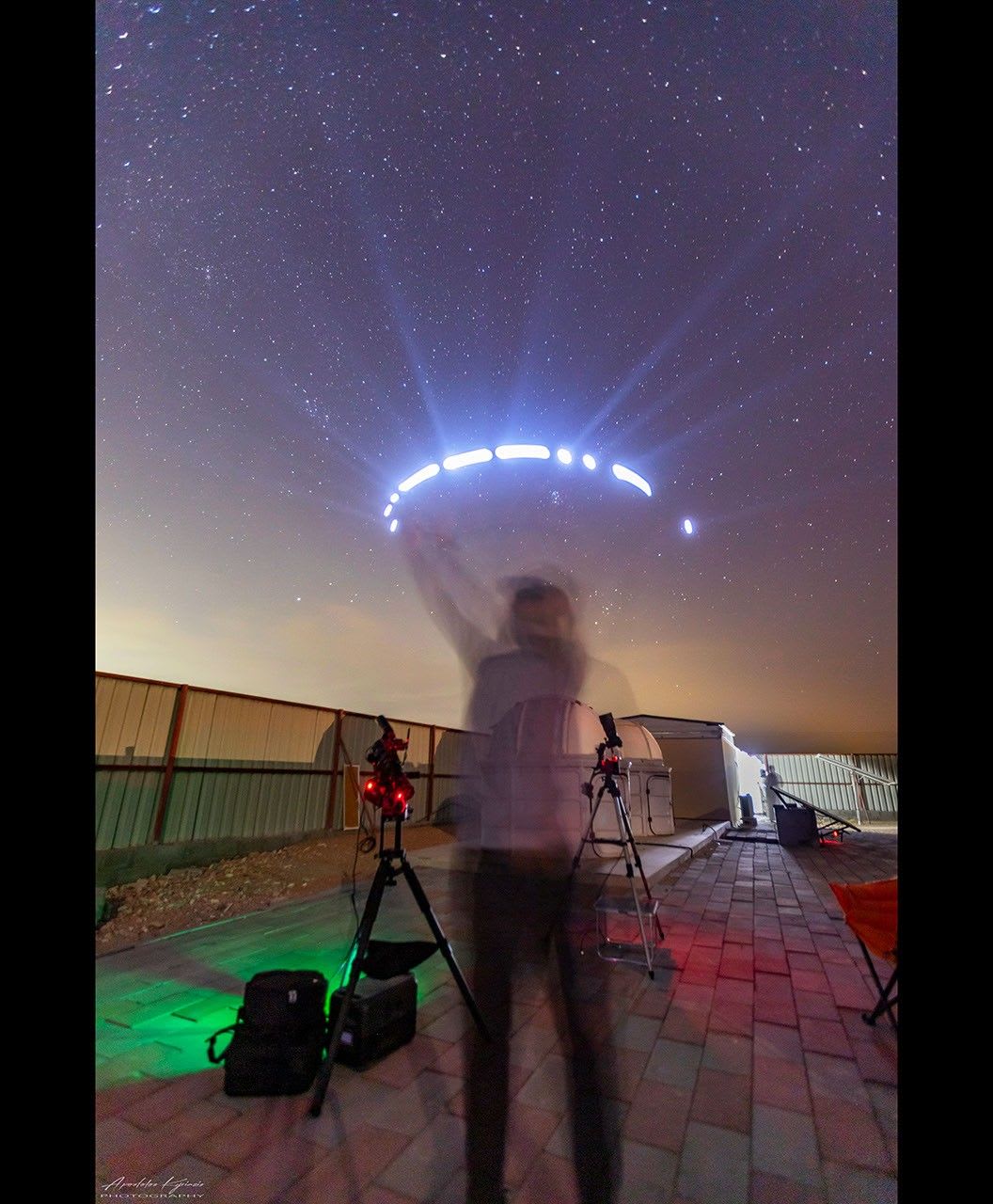
Explanation: On November 17, fans of interstellar spaceflight around planet Earth were invited to shine a message into the night sky. Traced by a flashlight beam switched on and off, the dashes and dots of a Morse code message captured in this time exposure from the Emirates Astronomical Observatory, are read V-G-R. That's a call sign for the Voyager 1 spacecraft currently in interstellar space some 26 billion kilometers away. How long did it take the message to reach humanity's most distant interstellar spacecraft ? Traveling at the speed of light, the answer is one day . In fact, the Voyager 1 spacecraft was confirmed to reach its one light-day distance milestone on November 18, at 10:16:07 UTC, nearly 50 years after launch in 1977. For extra credit, fans of math can calculate that at one light-day per 50 years, Voyager 1 will reach its one light-year (365 light-days) distance milestone in about 18,250 years. Tomorrow's picture: pixels in space

NASA explores the unknown in air and space, innovates for the benefit of humanity, and inspires the world through discovery.

Join the Conversation