
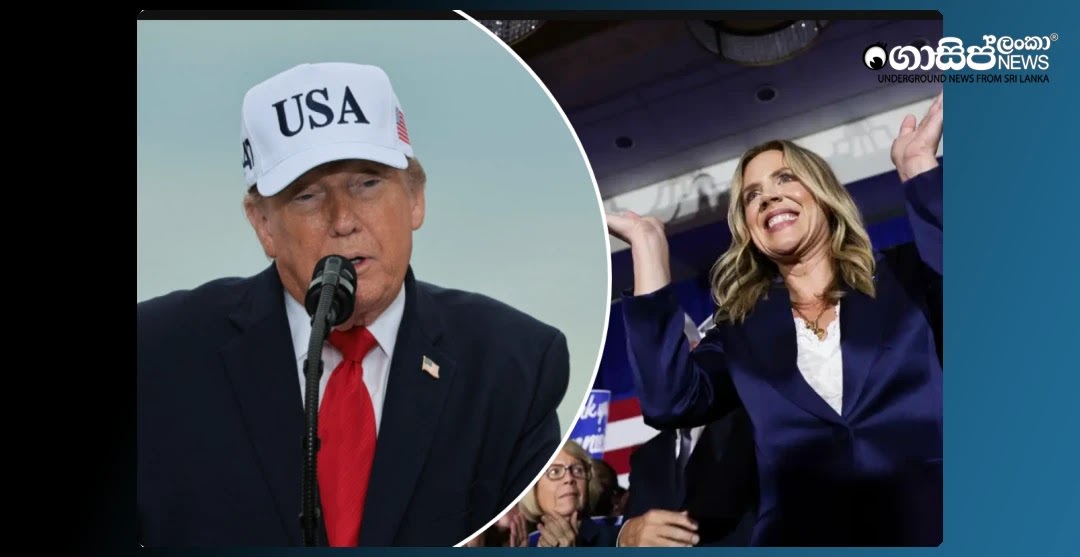
With the Democratic Party gaining control of the US Senate in the midterm elections held on November 3, 2026, the next two years of President Donald Trump's second term face a severe political challenge. Major international media reports indicate that this victory is a direct and decisive rejection of the Trump administration's policies.
Before the election, the Democrats needed only a net gain of four seats to overturn the Republican Party's 53-47 majority in the Senate. However, Democratic candidates managed to secure at least six seats held by the Republican Party, including states considered Republican strongholds, which Trump easily won in the 2024 presidential election.
Among these were several historic victories reported after decades. James Talarico defeated Texas Attorney General Ken Paxton, becoming the first Democrat to win a Senate seat from that state since 1988. In Kansas, Pastor Adam Hamilton defeated Roger Marshall, becoming the first Democratic Senator from that state since 1932. In South Carolina, Annie Andrews defeated Darlene Graham, the sister of the late Lindsey Graham, marking the first Democratic Senate victory from that state since the late 1990s. Additionally, in Ohio, former Senator Sherrod Brown defeated Senator John Husted, and in Iowa, Josh Turek defeated Representative Ashley Hinson. Former Governor Roy Cooper won the vacant seat in North Carolina, and Jon Ossoff retained his seat in Georgia.
According to vote counting reports, even with final results pending in some seats, Democrats had secured a majority by winning approximately 52 seats, while the Republican Party held only about 41 seats. Predictions have also been made that control of the House of Representatives will lean towards or be won by the Democrats. Democratic leaders, including Chuck Schumer, who called this victory a generational turning point, stated that the path to relief for the people has opened. With control of the Senate, Democrats will be able to block the President's cabinet and judicial appointments, including Supreme Court justices, initiate investigations, and exert influence over legislative discussions.
Although voters were asked before the election to cast their ballots as if they themselves were on the ballot, after the defeat, Trump stated via his Truth Social account that he did not contest the election, and if he had, he would have achieved a magnificent victory. In interviews, he accepted the election results and expressed readiness to work with Democrats, attributing the defeat to Republican candidates and the historical setback faced by a sitting president's party in midterm elections. Nevertheless, this outcome is widely interpreted as a referendum on his second term and a context in which his political power will be significantly limited within a divided governance structure.
Voters highlighting the cost of living as their primary concern was a key factor in this shift. Although Trump had pledged to lower prices, tariffs imposed on imported goods led to price increases. Furthermore, with the disruption of Middle Eastern oil supplies, including the Strait of Hormuz, due to the US-Israel war against Iran that began in early 2026, fuel and energy prices rapidly escalated. In some instances, petrol prices were reported to have increased by over thirty percent annually, further exacerbating inflation. This economic pressure contributed to the Republican Party's decline even in traditional rural and conservative strongholds.
This political change in Washington also carries significant economic implications for Sri Lanka. The United States is the country's primary single export market for goods, including apparel and rubber. Sri Lankan exporters are already under pressure due to recent American tariff measures, including high reciprocal tariff rates imposed on Sri Lankan goods. In such a climate, a Democratic-controlled Congress is more likely to oppose aggressive tariff policies, which could create an opportunity for export-dependent economies like Sri Lanka to obtain tariff concessions or negotiated solutions.
On the other hand, the rise in global oil prices amidst the Iran conflict will impact inflation and the balance of payments by increasing domestic fuel, transportation, and other import costs. While the implementation of major financial policies might be slowed by a divided government in Washington, it is expected that the further exacerbation of unilateral trade decisions will be curbed. Accordingly, beyond the domestic political power struggle in America, these election results will directly affect export demand, fuel prices, global financial conditions, and the stability of transactions with a major trading partner.




Loading comments…