
108 years ago, at the 11 th minute of the 11 th hour of the 11 th day of November, the First World War ended.
That conflict shapes the world we live in today. The war’s conclusion began a half century process that ended European imperialism, an era that had shaped the world for the preceding three centuries. The war also spawned an anti-liberal communist movement that originally took root in Russia, spread across Asia, and still shapes our global political landscape.
While I’m certain that there are some great musical selections to commemorate the end of the First World War, I’d rather focus on a song released in May 2006 by the country duo, Big & Rich titled, “ 8 th of November .”
The music video starts with a narration by Kris Kristofferson, the country music star, Rhodes Scholar, and U.S. Army veteran. He recounts one of the first major battles of the Vietnam War.
President Lyndon Johnson awarding the Congressional Medal of Honor to Specialist Sixth Class Lawrence Joel for his bravery on November 8, 1965 in South Vietnam.
The song commemorates one of the first major battles of the Vietnam War which took place 61 years ago today. Americans, Australians, and New Zealanders fought to defend that South Vietnam from a North Vietnamese invasion, supported by the Soviet Union and the People’s Republic of China.
1965 was a turning point in Southeast Asia. It was the year that the Communists transitioned from primarily waging an insurgency with a proxy force to a full-scale invasion of South Vietnam and expanding the war into the Kingdoms of Laos and Cambodia.
Before 1965, the Communists sought to overthrow the Government of South Vietnam (the Republic of Vietnam) through an insurgency using a group called the National Front for the Liberation of South Vietnam (aka the Viet Cong). With the help of American military advisors, the Army of the Republic of Vietnam (ARVN) had prevented the Viet Cong from extending its control beyond rural areas. The government in Saigon certainly faced problems at the start of 1965, but the Viet Cong had been pushed into isolated areas along the border while the South Vietnamese government controlled the populated areas.
Facing failure to achieve his primary objective of overthrowing the Government of South Vietnam and annexing the country, the North Vietnamese communist leader, Ho Chi Minh, escalated his war of aggression in 1965.
Ho first asked for and received massive military assistance from the Soviet Union and the People’s Republic of China. The purpose of this assistance was to allow North Vietnam to conduct a full-scale invasion of South Vietnam. By the end of 1965, the PRC had committed tens of thousands of PLA troops into North Vietnam to perform logistics, construction, and air defense. Over the next seven years, 320,000 PLA troops would serve in North Vietnam and according to the PLA’s own history of the war, the Chinese would shoot down over a thousand American aircraft. With their shared border, weapons, tanks, artillery, food, and medical supplies flowed into North Vietnam and allowed the country to weather American counterattacks.
By the late 1960s, with the Soviet Union and PRC nearly at war with one another, both communist heavyweights competed to provide more support to the North Vietnamese.
With Soviet and Chinese support, Ho invaded South Vietnam with his regular military forces from the People’s Army of Vietnam (PAVN, North Vietnam’s regular army) to achieve what the Viet Cong insurgents had been too weak to accomplish.
It was this invasion by the North Vietnamese army which caused the Johnson Administration to commit large U.S. military units to the defense of South Vietnam in 1965. That buildup started in the summer of 1965. Up until that point, the American effort had largely been in the form of advisors assigned to aid their ARVN counterparts and airpower from bases in South Vietnam, the wider region, and from aircraft carriers.
By the fall of 1965, regular units of the U.S. Army, the U.S. Marine Corps, and allies like Australia and New Zealand faced similar numbers of PAVN soldiers who had infiltrated into South Vietnam through the Kingdoms of Laos and Cambodia. By November as the rainy season was coming to an end in Central Vietnam, the allies were ready for a Communist escalation.
Most of us are familiar with a battle which took place November 14-18, 1965. The Battle of Ia Drang Valley was first major military engagement between U.S. forces and regular North Vietnamese army units. That battle is also often identified as the first major battle employing a massed helicopter air assault and air mobility operations. This was the battle memorialized by the book, We Were Soldiers Once… And Young by Hal Moore and Joseph Galloway, as well as the 2002 movie We Were Soldiers starring Mel Gibson as Lieutenant Colonel Hal Moore, the Battalion Commander of 1 st Battalion, 7 th Cavalry Regiment of the 1 st Cavalry Division.
If you have never read the book, you should.
A week before the Battle of Ia Drang Valley, a combined force of Americans paratroopers, Australians, and New Zealanders conducted Operation HUMP, a massed helicopter air assault to identify and destroy Communist forces massing to the north of one of America’s most important air bases in South Vietnam, Bien Hoa.
On November 5, the 1 st Battalion, 503 rd Infantry Regiment from the 173 rd Airborne Brigade, 1 st Battalion of the Royal Australian Regiment, and elements of New Zealand Army artillery conducted a helicopter assault to a series of hills about 20 miles north of the Bien Hoa Air Base. There they established an artillery fire base and began conducting patrols under cover of their artillery and air support. Intelligence indicated that multiple Viet Cong regiments were massing to conduct an attack on Bien Hoa. The purpose of Operation HUMP was to disrupt their attack.
On November 7 th , the Australians skirmished with a fleeing Viet Cong unit, killing three. They identified empty camps, abandoned supplies, and bunkers that indicted they had found a Viet Cong base. The Australians destroyed the camp without engaging a large Viet Cong force. Unfortunately, two Australian soldiers went missing during the operation, likely captured by the Viet Cong, and were later found dead.
The next day at 6am on November 8, 1965, C and B Companies, 1/503 rd Infantry advanced on hills to their northeast and northwest where they suspected Viet Cong forces to be located. At 8am, C Company on the left came under heavy fire from the 3 rd Battalion of the Viet Cong 271 st Regiment, which had been given orders to attack the Americans the night before. In the past, Viet Cong units had avoided contact with large concentrations of allied troops, but the war was changing.
Over the next 24 hours, the entirety of 1 st Battalion, 503 rd Infantry would fight a pitched battle with the Viet Cong 271 st Regiment and elements of the 274 th Regiment. By the end, 49 Americans were killed, most from C Company, and nearly 1200 Viet Cong. American casualties would be nearly five-fold at the Battle of Ia Drang Valley just a few days later.
During the battle, Specialist Fifth Class Lawrence Joel, an Army medic, disobeyed orders to stay down and rushed into fire to treat and evacuate wounded paratroopers. Sixteen months later, on the South Lawn of the White House, President Johnson would award a promoted Specialist Sixth Class Lawrence Joel the Congressional Medal of Honor. He was the first living African American awarded the Medal of Honor since the Spanish-American War and the first medic to win the award in the Vietnam War.
“For conspicuous gallantry and intrepidity at the risk of his life above and beyond the call of duty. Sp6c. Joel demonstrated indomitable courage, determination, and professional skill when a numerically superior and well-concealed Viet Cong element launched a vicious attack which wounded or killed nearly every man in the lead squad of the company. After treating the men wounded by the initial burst of gunfire, he bravely moved forward to assist others who were wounded while proceeding to their objective.
While moving from man to man, he was struck in the right leg by machine-gun fire. Although painfully wounded his desire to aid his fellow soldiers transcended all personal feeling. He bandaged his own wound and self-administered morphine to deaden the pain enabling him to continue his dangerous undertaking. Through this period of time, he constantly shouted words of encouragement to all around him. Then, completely ignoring the warnings of others and his pain, he continued his search for wounded, exposing himself to hostile fire; and, as the bullets dug up the dirt around him, he held plasma bottles high while kneeling completely engrossed in his lifesaving mission.
Then, after being struck a second time and with a bullet lodged in his thigh, he dragged himself over the battlefield and succeeded in treating 13 more men before his medical supplies ran out. Displaying resourcefulness, he saved the life of one man by placing a plastic bag over a severe chest wound to congeal the blood. As one of the platoons pursued the Viet Cong, an insurgent force in concealed positions opened fire on the platoon and wounded many more soldiers. With a new stock of medical supplies, Sp6c. Joel again shouted words of encouragement as he crawled through an intense hail of gunfire to the wounded men. After the 24-hour battle subsided and the Viet Cong dead numbered 410, snipers continued to harass the company.
Throughout the long battle, Sp6c. Joel never lost sight of his mission as a medical aidman and continued to comfort and treat the wounded until his own evacuation was ordered. His meticulous attention to duty saved a large number of lives and his unselfish, daring example under most adverse conditions was an inspiration to all. Sp6c. Joel’s profound concern for his fellow soldiers, at the risk of his life above and beyond the call of duty, are in the highest traditions of the U.S. Army and reflect great credit upon himself and the Armed Forces of his country.”
Joel had joined the U.S. Army at 18 in 1946 and had served in the Korean War before being deployed to South Vietnam in 1965.
On the 8th of November 1965, he was 37 years-old and had been in the Army nearly two decades. That day he demonstrated what valor and courage looked like.
Joel would retire in 1973 as a Sergeant First Class serving his country as a medic for nearly three decades. Lawrence Joel passed away in his hometown of Winston-Salem, North Carolina on February 4, 1984. He is buried in Section 46, Grave 15-1 at Arlington National Cemetery.
You can visit over Veterans Day and pay your respects.
The finest Americans of that generation weren’t protesting on college campuses, burning their draft cards, or avoiding military service because of bone spurs, they were defending South Vietnam from a full-scale communist invasion.
I think it is about time that Americans reconsider the narrative they have been told about the Vietnam War.
The idea that the United States was the aggressor in Vietnam is a fantasy.
North Vietnam waged an unprovoked war of aggression against an independent and sovereign Republic of Vietnam. Hanoi was unsatisfied with the negotiated agreement they had with France and sought to annex their southern neighbor much as Kim Il Sung had done when he launched his war of aggression against South Korea in 1950.
North Vietnam could never have waged its war of aggression to annex the Republic of Vietnam without the massive military support of the Soviet Union and the People’s Republic of China. In May 1965, six months before Operation HUMP took place, Ho Chi Minh appealed to Moscow and Beijing for support to wage his war and the Soviets and Chinese provided it. Simultaneously, the Soviet Union as a permanent member of the United Nations Security Council blocked all efforts to provide aid to South Vietnam under a UN mandate as well as block all recognition of South Vietnam as a member of the UN.
The Soviets had learned their lesson from 1950.
In January 1950, the Soviet Union walked out of the United Nations in protest that the new People’s Republic of China was not recognized as the legitimate seat for China at the UN. This decision to absent themselves came to bite the Soviet Union when North Korea attacked South Korea with Stalin’s approval in June 1950. Without the Soviets at the UN Security Council to exercise their veto, the United Nations passed UN Resolutions 82, 83, and 84, which authorized an international coalition under UN authority to intervene and defend South Korea. That is why to this day that the alliance to defend South Korea from a North Korean attack is a United Nations Command under an American 4-star General.
By the 1960s, the Soviets and their Chinese comrades had learned how to manipulate international bodies through diplomacy and non-governmental organizations. By preventing the United Nations from authorizing military assistance to South Vietnam, or even formal membership in the United Nations, the Communists could portray American efforts to simply propping up their puppets and imposing a new form of imperialism. Through United Front Work as well as efforts to sway leftist organizations across Europe and North America, the Communists successfully painted American efforts as illegitimate, while simultaneously blocking the legitimate government of South Vietnam from appealing for international assistance.
The historical literature of the Vietnam War, which was largely written by those who protested against it, needs serious revision. For too long, the Vietnam War has been portrayed as something happening outside of the broader Cold War, as something that the United States pursued for illegitimate reasons, when in fact Soviet and Chinese Communist assistance was instrumental to the war and the effort to stop the spread of communist insurgencies across the developing world was justified given communist aggression.
If not for some travel today, I would have gotten this issue out earlier.
But since I was tardy, I get to add some late breaking news.
On Sunday afternoon, after a week of reports that Nvidia’s CEO Jensen Huang had an intimate relationship with a suspected Chinese intelligence asset, Jensen Huang admitted publicly and in writing that he had an affair with this woman and the board of Nvidia has announced that it would begin an independent investigation.
It is hard to understate the level of influence that Jensen Huang has had on U.S. technology policy, national security policy and foreign policy over the last two years. Almost single-handedly, Jensen Huang has convinced President Donald Trump to gut U.S. export controls on the most advanced AI chips. This has thrown a lifeline to Chinese AI companies that are almost entirely dependent on access to Nvidia chips to make their models work.
To find out now, after months of denying any misconduct, that Jensen was having an affair with a suspected Chinese spy, is a bit mind-boggling.
I’d ask everyone to consider what who likely happen if the roles were reverse.
Say perhaps that the most important Chinese technology CEO who had an incredible close relationship with Xi Jinping and had influenced Chinese policy to aid the United States was discovered to be having an affair with a suspected asset of the CIA.
I can tell you what happen, that technology CEO would be disappeared to a black site and interrogated for months. His company would be stripped from him, and he would never see the light of day again.
Fu Xiaotian and Qin Gang, when he was PRC Ambassador to the United States.
Qin Gang the protégé of Xi Jinping who was made Foreign Minister in December 2022 following the 20 th Party Congress. He disappeared in June 2023 and was stripped of his position a few months later as it started to leak out that he had had an affair with a Chinese journalist, Fu Xiaotian, while he was the PRC Ambassador to the United States. Apparently, the Ministry of State Security and the leadership of the Chinese Communist Party feared that Fu Xiaotian was a CIA asset.
Qin has been demoted and humbled, Fu Xiaotian disappeared in April 2023 after she boarded a private jet in Los Angeles with her infant son from Qin Gang. Flight records confirm the aircraft landed in Beijing. She has not been seen or heard from since.
I doubt anything so drastic will happen to Jensen Huang, but it is interesting to consider the implications.
Can the shareholders of Nvidia, the world’s most valuable company as of this evening, ever trust the company’s CEO? He has lied for months about his relationship with the head of Megaspeed, which he himself has now been forced to admit given the mounting evidence. He has lobbied hard for policies that benefit the national security interests of the PRC, he personally intervened with the Commerce Department and the White House to avoid scrutiny of his company’s dealings with the PRC, and has waged a scorched earth battle in Washington to discredit anyone who would question his intentions towards the PRC.
As we consider the kinds of investigations that a Democratic Congress might pursue, it is hard to imagine a more important nexus of Big Tech hubris, national security threats from the PRC, and corruption within the Trump Administration.
My prediction is that Jensen Huang, Howard Lutnick, David Sacks, and Jeffrey Kessler (Under Secretary of Commerce for Industry and Security) are going to have some really fun Congressional hearings under oath.
Thank a Veteran on Wednesday, he or she will appreciate it.
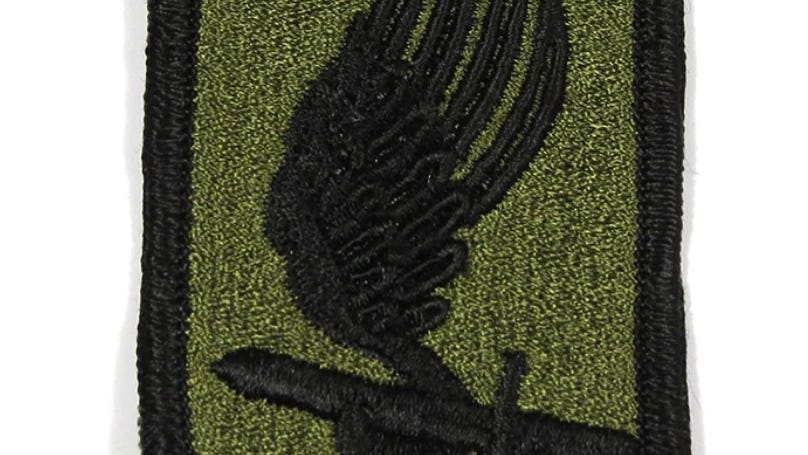
One last thing about the 173rd Airborne Brigade’s service in Vietnam. It was the first major unit to deploy to the country in 1965 and would serve there until 1971. Over that period of time, the Sky Soldiers would earn more than 6,000 Purple Hearts.
China Halts Listings in Bid to Bolster Struggling Markets Zijing Wu and William Sandlund, Financial Times, November 3, 2026
CSI 300 index posted worst month in more than a decade in October.
Chinese regulators have told banks to hold fire on company listings and large share sales in an effort to bolster the country’s struggling stock markets.
The China Securities Regulatory Commission has held meetings with investment banks and given informal instructions — or “window guidance” — in the past few days about pausing initial public offerings, according to three people with knowledge of the discussions.
Large sales by existing shareholders have also been temporarily suspended until the markets have recovered.
The CSI 300, mainland China’s benchmark index, fell 8.5 per cent in October for its worst month in more than a decade. It is down 15 per cent this year, while the S&P 500 has gained 10 per cent.
Chinese equities have been mired in a prolonged downturn since the summer, pressured by macroeconomic issues and mounting scepticism about AI investment. A tax crackdown on offshore trusts has also prompted some billionaires to sell stocks to pay their tax bills, further weighing on markets.
Earlier interventions, ranging from state-backed fund purchases in July to recent regulatory measures limiting share sales, have failed to reverse the decline.
Chinese policymakers have previously slowed the pace of IPOs during market downturns as part of attempts to preserve liquidity.
The move threatens to put the brakes on dealmaking in China’s equity markets, which had shown signs of revival after a prolonged downturn. IPO deal volume this year has reached more than Rmb292bn ($44bn) — the highest since 2023 — according to Bloomberg data. Chipmaker YMTC is one company that had been expected to list this year, but is yet to do so.
The new measures are in addition to earlier guidance last month that included stabilisation methods such as accelerated share buybacks and asking investors to curb equity sales, according to the people.
The moves were “unlikely to generate a lasting turnaround unless paired with something that addresses the structural challenges more directly”, said Thomas Mathews, Asia-Pacific head of markets at Capital Economics. “That means boosting earnings growth, which in the near term probably means monetary or fiscal support.”
On Monday the CSRC, People’s Bank of China, and National Financial Regulatory Administration said they held meetings with securities brokerages and fund companies on ways to stabilise stock markets. Measures include cutting the rate on its relending facility for share buybacks to 1 per cent from 1.25 per cent, boosting swap operations and encouraging share buybacks.
Market reaction was muted on Tuesday, with the CSI 300 ending 0.2 per cent lower and the tech-focused Star 50 index closing down 3.8 per cent, while Hong Kong’s Hang Seng index gained 0.6 per cent
Sam Konrad, investment manager at Jupiter Asset Management, said: “This is an example of why we don’t have a fundamentally positive view on the long-term outlook for Chinese equity markets. It’s a suggestion that Chinese equity markets are reliant on government support to try and boost them.”
He added: “Over the long term Chinese equity markets have been some of the worst-performing equity markets in the world. We think the economic system in China means growth is not translated into earnings growth.”
Jason Lui, head of Asia-Pacific equity and derivative strategy at BNP Paribas, said: “While these policies may not trigger an immediate reversal of sentiment similar to September 2024, they present medium-term opportunities for investors seeking to accumulate China A-share exposure.”
Chinese stocks rebounded in September and October 2024 after regulators unleashed a wave of stimulus, including two central bank liquidity facilities designed to help brokers and institutional investors buy shares.
The rally gained further momentum in early 2025 as DeepSeek’s breakthrough prompted global investors to revalue Chinese technology stocks. But confidence was shaken by Donald Trump’s tariff war, prompting Beijing to mobilise state-backed funds, known as the “national team”, to help set a floor for China’s stock markets from April last year.
However, rounds of sales in the national team’s ETF and stock holdings in the first quarter of 2026 renewed doubts about the rally’s sustainability.
The CSRC did not immediately respond to a request for comment.
The Little-Known Chinese Bank in the Middle of Iranian and Russian Money Flows Alexander Osipovich, Rory Jones, and Patricia Kowsmann, Wall Street Journal, November 3, 2026
China has emerged as a key hub for illicit money flows, but Washington is reluctant to crack down, officials say.
The U.S. has tried for years to cut off its adversaries from the world’s financial system. But money from places such as Iran and Russia has kept on flowing—in large part thanks to banks in China, people familiar with the activity say.
The challenge is exemplified by a little-known regional bank in eastern China, which in recent years emerged as a key conduit for Iranian and Russian financial transactions, according to former U.S. officials and documents seen by The Wall Street Journal. The funds were used to buy Chinese goods in violation of Western sanctions, including some with potential military applications, the documents show.
The bank, Zhejiang Chouzhou Commercial Bank, was flagged internally by U.S. officials during both the Biden and Trump administrations for facilitating transactions that appeared designed to evade sanctions, former officials said. ZCCB stood out from other Chinese banks for how frequently it came up in U.S. monitoring of Iranian and Russian money flows, they said.
But Washington stopped short of slapping ZCCB with sanctions. It was difficult to determine whether ZCCB knew about the funds’ origins, and Washington worried that targeting the bank could upset relations with Beijing or disrupt China’s financial system, the former officials said.
The U.S. faces similar dilemmas in dealing with several other Chinese banks involved in trade with Russia and Iran, current and former officials say. The Treasury Department in October 2025 said Chinese bank accounts were the main source of roughly $5 billion that Iranian shell companies moved around the world in the prior year.
ZCCB said in response to questions from the Journal that it has always adhered to Chinese law and closely monitored international regulation.
“We are committed to conducting business in compliance with applicable laws and regulations, including applicable anti-money-laundering, counterterrorist financing, and sanctions risk management requirements,” ZCCB said.
China says it abides by international law in trade with Iran and Russia, but it rejects what it describes as unilateral American sanctions against the countries.
Documents seen by the Journal show Iranian companies attempting to send money to ZCCB, routing it through what the U.S. government calls a Tehran-backed shadow banking network. Other documents show that ZCCB was a frequent destination for payments made through A7, a Russian sanctions-evasion network that was labeled a “significant transnational criminal organization” by the Treasury last month.
The documents don’t show whether ZCCB’s management knew the funds involved sanctioned entities in Iran and Russia, whose roles were obscured behind a web of front companies and intermediaries.
Hunting “Teacher Li”: Italy Finds Beijing’s Transnational Repression in Milan Massimo Introvigne, Bitter Winter, November 3, 2026
Ten suspects, including leaders of two Fujianese associations, allegedly tracked and stalked a dissident influencer on behalf of the Chinese police.
For years, human rights organizations have warned that the Chinese Communist Party (CCP) follows its critics well beyond China’s borders. Italy has now produced judicial evidence of this “transnational repression” on its own soil. On October 28, 2026, the Public Prosecutor’s Office in Milan announced it had closed its investigation into ten people, four of them accused of forming a criminal association to monitor, intimidate, and silence Chinese dissidents living in Italy.
Under Italian criminal procedure, closing an investigation is the step that comes before the prosecutor asks a judge to send suspects to trial. The ten people under investigation have not yet been formally charged, and they remain presumed innocent. Even so, the end of an inquiry that lasted years confirms that investigators found enough material to argue the case in court.
The investigation was coordinated by prosecutor Alessandro Gobbis and carried out by the DIGOS of Turin, the branch of the Italian State Police that handles politically motivated crimes. Its main target was the harassment of Li Ying, a 34-year-old Chinese artist living in Italy who is known online as “Teacher Li.” His account on X has about two million followers, and he has become one of the most widely followed sources of uncensored news about China. He rose to international prominence in 2022 by posting videos of protests and incidents that Chinese censors were deleting at home, and his followers often send him material they cannot publish themselves.
That work has come at a high price. Li has said that in 2022 Chinese police contacted his parents, visiting them at night and asking who was paying their son. In Italy, he has had to move repeatedly and live in semi-hiding, shifting between Turin and Milan. He has also reported that Chinese authorities questioned some of his followers inside China, a tactic aimed at shrinking his audience by frightening those who read him.
According to the prosecutors, all ten suspects, including two Italian citizens, took part in a series of stalking episodes against Li in Milan and Turin between 2023 and July 2025. Their alleged purpose was to “dissuade him from persevering” in what the indictment, echoing the vocabulary of Beijing, calls his “propaganda” against “Chinese government policies.” Investigators reportedly started looking into the case in 2025, after evidence emerged that Li had been followed and filmed. During one search, police found on a laptop around ten videos, some of them showing the area around his home in Milan.
The most serious accusation concerns the alleged criminal association. Prosecutors say its goal was to prevent dissidents from spreading information about conditions in their country of origin and from exercising their freedom of expression. A central figure, according to the investigators, is Wang Songqiang, 57, who lives near Milan and serves as vice president of the Association of Fujian Chinese in Milan. Prosecutors claim he acted “on behalf of the Chinese police,” maintained constant contact with Chinese diplomatic personnel and with members of the United Front Work Department, and coordinated the search for dissidents including Li, while also personally taking part in tracking them.
The United Front Work Department is the CCP body that manages relations with Chinese communities abroad and seeks to steer them in line with Party interests. Its presence in an Italian criminal file is significant, since international researchers have long described it as a key instrument for influencing and policing the diaspora.
Another alleged member of the association is Liu Zhengang, president of the Italian Association of Fujian Chinese Entrepreneurs, who prosecutors say also acted on instructions from the Chinese police and joined in searches and stakeouts. A third suspect, Zhao Jianbin, is accused of recruiting fellow Chinese nationals to follow targets while staying in close touch with Chinese authorities present in Italy. Zhao also allegedly gathered reports from informants through a WeChat group in which participants had discussed “tracking down Li” since at least March 2025. The remaining six suspects are accused of carrying out surveillance and shadowing without being permanent members of the group.
China’s Top Spy Agency Recruited Woman Who Targeted Jensen Huang
Julian E. Barnes, Tripp Mickle, Paul Mozur, and Maggie Haberman, New York Times, November 6, 2026
U.S. intelligence concluded that Alice Huang, a Chinese business executive who developed a close relationship with Nvidia’s leader, was an asset of Beijing’s Ministry of State Security.
A Chinese businesswoman who had a close relationship with the chief executive of one of the most important artificial intelligence companies in the United States was a spy for China’s Ministry of State Security, Beijing’s top intelligence agency, according to people briefed on U.S. surveillance.
The businesswoman, Alice Huang, was recruited by the ministry to collect intelligence on Jensen Huang, the chief executive of Nvidia, as part of a drive to learn more about American A.I. chips and potentially influence the company to push for its most advanced chips to be made available to China, the people said.
Mr. Huang, an influential ally of President Trump’s, is a pivotal figure in the intense global competition for A.I. supremacy. Nvidia’s advanced chips are sought after around the world, and the company’s growth has helped drive the stock market over the past several years.
The assessment by U.S. officials that Ms. Huang was working directly for the main Chinese intelligence agency has not previously been reported. It adds important new detail to what appears to be an especially audacious example of China’s longstanding industrial espionage efforts.
China’s interest in Mr. Huang, and precisely what Beijing hoped to achieve by having one of its intelligence assets begin a close relationship with the executive, have been a focus of U.S. spy agencies. Those questions are now also of interest to Capitol Hill. On Thursday, the Republican leaders of three influential House committees requested that Mr. Huang appear before them later this month in a closed-door briefing regarding his interactions with Ms. Huang, who is not related.
The New York Times reported last week that Mr. Huang was a target of a Chinese intelligence operation, and that U.S. intelligence agencies were conducting electronic surveillance of Ms. Huang, a Chinese citizen, for at least a year. The Times reported that Mr. Trump had been briefed last year about Mr. Huang’s relationship with her, but chose not to do anything about it.
Ms. Huang speaks English well and has relationships with executives at the highest levels of the A.I. chip industry, including Mr. Huang and the leaders of Gigabyte, one of the top assemblers of Nvidia supercomputers, said people who have met her. She has attended industry conferences and private executive dinners.
It is unclear when Ms. Huang first met Nvidia’s leader. In 2024, around the time the two of them were photographed together at a bar in Taipei, her company, Megaspeed, began a multibillion-dollar purchase of advanced A.I. microchips.
To many in the industry, the well-funded push by Megaspeed into A.I. appeared to come out of nowhere.
Ms. Huang was connected to a network of companies and investors clustered around Shanghai and Zhejiang province that had used their ties to local officials in Shanghai to push aggressively from mobile video games into data centers, which provide the computing power behind artificial intelligence.
Megaspeed has been building data centers in Southeast Asia and then renting their computing power to Alibaba, the giant Chinese internet firm, giving China a backdoor way of getting access to advanced Nvidia chips. Nvidia is restricted by the United States from selling those chips directly to China.
Beyond its local connections, the network also has a financial link to the Chinese military establishment, through an investment in a cybersecurity subsidiary of China Electronics Technology Group, one of the country’s largest makers of military technology.
The Chinese government has set goals to overtake the United States as the world’s leader in A.I. technology by 2030. The focus on A.I. has increased across the parts of the Chinese government that specialize in national security, including the spy agency that recruited Ms. Huang.
China’s M.S.S. spy agency was once a backwater. But when Xi Jinping took over as China’s leader in 2012, he began to invest in the agency. Today it is many times larger than the C.I.A., collecting human intelligence and intercepting electronic communications. The agency also conducts counterintelligence operations.
Peter Mattis, a former C.I.A. counterintelligence analyst, said China’s spy agency had made technology a focus of its activities, seeing it as “the key fight for dominance in the economic world.”
“They’re interested in what’s taking place in technology, in the technical specifications of what’s being built and in shaping decision-making as it relates to those things,” said Mr. Mattis, who is now the president of the Jamestown Foundation, a national security think tank. “Jensen is someone you’d want to influence because he wields a lot of power and is at the crux of a world-shaping technology.”
John Rizzo, a Nvidia spokesman, said that the company does not share classified information with its customers, and that customers do not ask Nvidia to press the U.S. government to change its policies on chip sales to China.
He added that the Chinese government had “consistently promoted its own domestic alternatives in China, including Huawei, and strictly limited imports of our data center products.”
Mr. Rizzo has maintained that Mr. Huang’s interactions with Ms. Huang were “not unusual” and consistent with the kinds of meetings he has with any of Nvidia’s many customers.
Liu Chang, a spokesman for the Chinese embassy, said The Times reporting was “unsubstantiated” and “nothing but smears against China.” Ms. Huang has not responded to multiple attempts to reach her for comment in recent days. Mr. Rizzo previously said that Mr. Huang’s interactions with Ms. Huang were “not unusual,” and that he speaks annually with thousands of executives who do business with Nvidia.
Spokeswomen for the White House and C.I.A. declined to comment.
Mr. Huang has been steadfast over the past several years in calling for the U.S. government to permit chip makers to sell A.I. technology to China. He has argued that doing so would create competition for Huawei, China’s tech giant, and slow its development of A.I. technology.
In 2025, he persuaded Mr. Trump to roll back a prohibition on A.I. chip sales to China and allow Nvidia to sell a less powerful chip there. He and the president later struck a deal to sell the company’s second-most-powerful chip to China, with the United States taking a 25 percent cut of sales. Mr. Trump later considered allowing Nvidia to sell China its latest chip, known as Blackwell. But he has backed off that idea.
Speaking at an investor conference in May, Mr. Huang said that China should not have access to Nvidia’s best technology, like its Blackwell chips or its forthcoming Rubin chip. He said the United States should have “the first, the most and the best, but simultaneously all American companies should compete globally.”
Founded in 1983, China’s M.S.S. spy agency long failed to win the confidence of the country’s leaders. The espionage and cyber-hacking arms of the People’s Liberation Army were for years considered the primary intelligence collection arms of Beijing.
The agency took on more of China’s espionage work after Beijing and Washington struck a deal in 2015 to curb cyberoperations, according to researchers and U.S. officials. In the years that followed, the Justice Department accused hackers associated with the M.S.S. of attempting to steal U.S. technology and infiltrate U.S. networks.
By 2023, the agency had emerged as a rival to the C.I.A., and began using A.I. to select and profile targets. It had expanded its network of spies through aggressive recruitment, and used its bigger budget to help Mr. Xi in his ambitions to challenge U.S. dominance.
The M.S.S. also used its ties to various Chinese companies to expand its work, in cyber-hacking, espionage and information operations. It is estimated to have hundreds of thousands of agents, which dwarfs the number of counterintelligence officers in the United States.
The agency continues to largely operate behind the scenes, but under its current leader, Chen Yixin, it has also taken on a more public role in Chinese life. In 2023, the agency created a WeChat account, mainly for domestic propaganda and for encouraging Chinese citizens to report people suspected of being foreign spies. The channel is also used to attack the United States for a supposed Cold War mind-set.
Mr. Chen is very familiar with the region of eastern China where Ms. Huang operates. A Zhejiang native, he spent a major part of his long career working for the province’s Chinese Communist Party. He served under Mr. Xi when Mr. Xi ran Zhejiang in the early 2000s. Political analysts say their ties are close.
Mr. Chen has been outspoken about the risks A.I. poses to the Chinese Communist Party. In a September essay in the state-run magazine China Cyberspace, he said that China needed to assert control over A.I. to protect political stability at home, defend against increasingly sophisticated cyberattacks and compete militarily with the United States. He said algorithms would help countries “gain the initiative on the battlefield.”
COMMENT - After months of lying about it, Jensen Huang admitted today he was having an affair with Alice Huang.
The Fifth Plenum: Party Discipline, Anti-Corruption and Centralised Leadership
Stefanie Kam, RSIS, November 4, 2026
The recently held fifth plenum of the Chinese Communist Party’s current Central Committee elevated Xi Jinping Thought on Party Building, codified cadre loyalty tests, and confirmed a record 33 expulsions ahead of the 21st Party Congress next year.
Silent on the United States and passing over Taiwan in a phrase, the communiqué issued at the end of the plenum invokes external pressure only to justify internal discipline.
The economic aspect of the communiqué lies in the provisions relating to cadres, suggesting that the focus of the 15th Five-Year Plan will be on tight supervision of its implementation rather than on incentives.
The Fifth Plenum: Fewer Chairs, More Rules for CCP Members Hu Zimo, Bitter Winter, November 2, 2026
More Targets, New Tradeoffs: How China’s Local Officials Navigate Competing Priorities Stanford Center on China’s Economy and Institutions, November 4, 2026
Xi’s Party: What to Look for at the Chinese Communist Party Plenum Jonathan A. Czin and Allie Matthias, Brookings Institution, October 23, 2026
China’s Message to Its Rivals: You Need What We Make David Pierson and Berry Wang, New York Times, November 2, 2026
Who Supervises the Sky Eye? Zack Chiang, Lingua Sinica, November 3, 2026
China Loves to Rank Its Cities. The Government Wants It to Stop The Economist, October 29, 2026
Who fell and who rose at China’s fifth plenum Kenji Kawase, Nikkei Asia, October 30, 2026
‘Unwritten Rules’ Become Newest Target in Communist Party’s War on Corruption Jane Cai and Alyssa Chen, South China Morning Post, October 30, 2026
China Confirms Expulsion of 33 Officials, as Xi’s Purge Deepens Chris Buckley, New York Times, October 29, 2026
China’s Leaders Vow Tougher Corruption Crackdown Joe Leahy and Edward White, Financial Times, October 29, 2026
China’s Xi Demands More Loyalty as Purges Trim Party Elite Chun Han Wong, Wall Street Journal, October 29, 2026
Chinese Communist Party taps big data surveillance to combat corruption Yukio Tajima, Nikkei Asia, November 1, 2026
Xi Jinping’s War on Humor: Taiwanese Comedian Hit for a Joke Gladys Kwok, Bitter Winter, October 29, 2026
Communist Party Pledges to Reach Deeper into China’s Tech and Digital Platform Sectors Xinlu Liang, South China Morning Post, November 1, 2026
Former Sinopec Chairman Fu Chengyu Under Investigation Luo Guoping, Caixin Global, November 1, 2026
China’s Communist Party Plenum Targets Passive ‘Nice Guys’ in Anti-Corruption Push Josephine Ma, South China Morning Post, November 3, 2026
Carved to Conceal: Mapping a Rhino Horn Trafficking Supply Chain from Zimbabwe to China
Zimbabwe’s convictions of two Chinese rhino horn traffickers are a real win, but the network behind them is still operating. C4ADS analysis links suspicious shipments from Zimbabwe to a web of Chinese logistics companies tied to one Guangzhou firm, showing why every seizure should be traced upstream.
This is the second installment our new series taking you inside C4ADS’ counter-wildlife trafficking work – our approach, the patterns we’re seeing, and where the opportunities for real impact lie.
In February 2025, Zimbabwean police arrested two Chinese nationals for allegedly attempting to ship rhino horn hidden inside a 13-kilogram owl statue from Harare’s Robert Mugabe International Airport to China. One of the two, Wang Lin, was already wanted for an October 2024 rhino horn seizure that involved the same method. The other, Wang Fuxi, had been convicted of ivory trafficking in a separate case in China in November 2015. Months later, police in Harare arrested another Chinese national, Cong Yanzhong, who was carrying three rhino horns totaling 7.7 kilograms. By the end of 2025, Zimbabwean courts had sentenced Cong to 18 years in prison and, according to a local source, Wang Lin to nine years, a huge win for Zimbabwe that reflects its commitment to fighting wildlife crime and protecting its natural resources.
Most wildlife crime investigations end here: a successful seizure, arrest, and – when the system works as it did in Zimbabwe – conviction. The convictions of Cong and Wang Lin, suspected to be buyers of aggregated rhino horn with the means to traffic the product to end markets in China, likely helped close a vector vulnerability in the local supply chain. However, the network of actors and entities required to make a wildlife trafficking operation successful does not end with one individual or at Zimbabwe’s borders. C4ADS identified instances of the same trafficking method and traced transcontinental threads back into China. Five shipments from Zimbabwe to Shenzhen point to a web of low-profile logistics companies linked to a single Guangzhou-based logistics company that likely facilitated the import of rhino horn through ports of entry in Guangdong Province.
China’s Soaring Chemical Exports Threaten New Trade War Front Joe Leahy, Financial Times, November 2, 2026
Can China’s Clean Power Stations Cope with a Changed Climate? Liu Lican and Song Feng, Dialogue Earth, November 3, 2026
Two Men Sentenced for Acting as Agents of the People’s Republic of China U.S. Department of Justice, October 30, 2026
How America Can Counter Chinese Coercion: The Case for an Economic Security Alliance
Theodore Bunzel, Edward Fishman, and Addar Levi, Foreign Affairs, November 2, 2026
Over the past year and a half, China has shown the world the power of its economic arsenal—starting with the United States. In April 2025, Beijing retaliated forcefully against U.S. tariffs, imposing matching across-the-board levies and export controls on rare-earth elements. This counterpunch rattled bond markets and disrupted auto supply chains, forcing Washington to seek a truce that persists to this day.
Next, China targeted Japan. After Japanese Prime Minister Sanae Takaichi described a potential Chinese naval blockade of Taiwan as a “survival-threatening situation” that could justify deploying Japan’s Self-Defense Forces, in November 2025, Beijing imposed suffocating bans on rare-earth exports to the country. Reluctant to reinflame tensions with Beijing, Washington offered nothing more than token support. Tokyo has held firm, refusing to walk back Takaichi’s statement; the restrictions remain in force, and Japan’s mineral stockpiles are dwindling.
Then Europe came under fire. Fed up with a trade deficit with China that had reached $1.1 billion per day, the European Union began exploring new tariffs to counter Chinese overcapacity in May. As China threatened “resolute countermeasures,” French President Emmanuel Macron urged U.S. President Donald Trump at the G-7 summit in June to join forces in addressing global imbalances. But the United States elected to sit on the sidelines again, and Europe blinked, opting for talks with Beijing, with an October deadline set by Europe to take concrete steps toward reducing China’s trade surplus. The EU has since been in tense negotiations with Beijing over reducing exports of hybrid vehicles, chemicals, and machinery, taking on the threat of Chinese retaliation alone.
China, in other words, is exploiting the disunity between the United States and its partners. In a divide-and-conquer strategy that mirrors the Trump administration’s own globe-spanning tariff campaign, Beijing has broken the Western alliance into more manageable pieces, allowing it to fight actors one on one. Its market heft and control over critical minerals have been decisive, and as its fear of retaliation has diminished, it has rolled out more aggressive export restrictions and sanctions. In 2023 and 2024, Beijing added only five Western companies to its Unreliable Entity List, exposing them to financial and legal penalties; in 2025 alone, it added 76.
Nvidia’s Huang Defends Megaspeed Ties as US Probes China Spying Allegations Ian King and Tom Giles, Bloomberg, October 29, 2026
Nvidia Uses Soft Power to Influence Customers, Shape Policy Leo Schwartz, Phoebe Liu and Stephanie Palazzolo, The Information, November 3, 2026
The Party and The City: lessons from the ICBC files UK-China Transparency, October 26, 2026
How America Can Counter Chinese Coercion Theodore Bunzel, Foreign Affairs, November 2, 2026
Oracle cancels $7bn Tencent AI deal under Trump pressure Demetri Sevastopulo, Arash Massoudi, Rafe Rosner-Uddin and Zijing Wu, Financial Times, November 4, 2026
The Penalty Box of Hurt Feelings David Bandurski, Jordyn Haime, and Zack Chiang, Lingua Sinica, October 30, 2026
How China’s ‘Sharp Power’ Chills Global Free Speech Christopher Walker, The National Interest, November 4, 2026
How the Japanese Spy Drama ‘Vivant’ Became the Target of China’s Anger Javier C. Hernández and Hisako Ueno, New York Times, October 30, 2026
La Liga goes dark in China over Mbappé comment Brendan Ruberry, Semafor, November 1, 2026
Human Rights and Religious Persecution
“The Quiet State”: Unveiling China’s Subtle Control in Tibet Massimo Introvigne, Bitter Winter, October 30, 2026
I Covered the Tiananmen Square Massacre. It Still Weighs on Me. Nicholas Kristof, New York Times, October 30, 2026
Thailand: Two Pardoned Uyghurs Now Face Deportation to China
Ruth Ingram, Bitter Winter, November 6, 2026
Freed from prison by a royal act of clemency, the men wait in the Bangkok immigration center from which 40 compatriots were secretly sent back to Beijing in 2025.
Last year, ignoring international outcry and bowing to pressure from Beijing, Thai authorities took 40 Uyghur men seeking refuge in the free world from the jail where they had been held for more than ten years and, under cover of darkness, forcibly returned them to China.
Two of the group’s former cellmates are now facing the same fate.
While last year’s batch of Uyghurs was being returned to their homeland, the pair were in a Thai prison serving a seven-year sentence for trying to escape in January 2020.
Following a recent royal pardon marking Queen Suthida’s birthday, they were transferred to Bangkok’s Suan Phlu Immigration Detention Center to await a decision on their future. This was the same center from which their former compatriots were piled into trucks and disappeared at night.
Human rights groups are now pressing for their release to a third country, while Beijing is insisting they be returned home.
Since their transfer on October 27, 2026, they have been held incommunicado, and all requests by human rights groups and lawyers to see them have been deferred. At least one country has offered to take them.
Elaine Pearson, Asia Director at Human Rights Watch, said: “Previous Thai governments have kept Uyghurs in inhumane detention for years and then complied with Beijing’s demands to send them to China, where they were forcibly disappeared.”
In a recent statement, she urged Thai Prime Minister Anutin Charnvirakul to “end forced returns to China and allow the two Uyghur men to travel to a safe third country.”
Joshua Wong’s 10-year sentence and the danger it exposes for US-based Hongkongers
Samuel Bickett, Hong Kong Law and Policy, November 5, 2026
Kashgar 1981: The Forgotten Uprising at the Dawn of China’s Reform Era
Abdurehim Gheni Uyghur, Bitter Winter, November 5, 2026
The killing of a Uyghur worker by a Han shopkeeper sparked a revolt that kept the city outside Communist Party control for nine days.
“Colonialism is not satisfied merely with holding a people in its grip and emptying the native’s brain of all form and content. By a kind of perverted logic, it turns to the past of the oppressed people, and distorts, disfigures, and destroys it” (Frantz Fanon).
Those who examine the modern history of resistance in East Turkistan usually think first of the 1990 Baren Revolution, the 1997 Ghulja Massacre, or the July 5, 2009 Ürümchi Massacre. Yet hidden in the unrecorded layers of history is a chain of events that erupted in the very first years of the Chinese Communist Party’s so-called “Reform and Opening-Up” era and set the course of colonial policies for the following forty years: the “October 30 National Resistance Movement,” which broke out in Kashgar on October 30, 1981, and whose 45th anniversary was celebrated last month.
It started from an ordinary criminal case and, in a single night, plunged an entire city into anger. The public protest that followed exposed the fragility of China’s ethnic policies in the “Reform and Opening-Up” era and the sheer hypocrisy of the so-called “regional ethnic autonomy” implemented in occupied East Turkistan.
The late 1970s brought the end of the Cultural Revolution and the so-called “yoke-loosening” policies promoted by Hu Yaobang, yet the injustices and colonial inequalities in East Turkistan remained in place. A series of serious conflicts preceded the 1981 outbreak, starting with the activities of the “East Turkistan People’s Revolutionary Party” and the “Mijit and Akhunop Uprising” of 1969, twelve years earlier. The “Mosque Incident” and the “Qotar Incident” in Akto and Kargilik, as well as the storming of an arsenal in Yengisar by young Uyghurs, were all signs of the ongoing struggle of the people of East Turkistan for liberation from Chinese domination.
Gardner Bovingdon, a political scientist and Uyghur studies scholar at Indiana University, noted in his acclaimed book “The Uyghurs: Strangers in Their Own Land” that in the early 1980s the continuous transfer of Chinese migrants into the region, the privileged institutional status of the Xinjiang Production and Construction Corps (XPCC, or Bingtuan), and the unemployment and inequality faced by Uyghurs in their own homeland had turned society into a tinderbox ready to explode.
On October 30, 1981, an incident at the Material Supply Bureau in downtown Kashgar released grievances that had been building up for years, and they soon spun out of control.
Abdusalam Tokhtam, a Uyghur contract worker, was cleaning a water tank inside the bureau compound when a Chinese shopkeeper named Ye Xin started quarreling with him about the foul smell. Abdusalam explained that he was only doing the job he had been hired for, and that any complaint should be addressed to the management. The shopkeeper went home, came back with a hunting rifle, and shot Abdusalam in the jaw, killing him on the spot.
The blatant brutality of the Chinese perpetrator and the biased, colonial-style way in which the authorities handled the case brought more than 50,000 Uyghurs into the streets to protest the injustice. The demonstration started peacefully, with the demand to “arrest and punish the murderer,” and later grew into a mass resistance movement against Chinese colonialism.
Industrial Policies and Economic Espionage
Debt fears swirling around state giant shine a light on China’s post-property reality Ji Siqi, South China Morning Post, November 4, 2026
China steps up defence of stock market in bid to revive AI boom William Sandlund and Haohsiang Ko, Financial Times, November 4, 2026
China to Convene Meeting on Supporting Stock Market, Reports Say Bloomberg, November 1, 2026
Volvo Car Sales Fall 16% Amid Tough U.S. and China Markets Dominic Chopping, Wall Street Journal, November 4, 2026
China’s Speed in Clinical Trials Draws Drugmakers Amber Tong, Ashleigh Furlong, and Fabienne Kinzelmann, Bloomberg, October 29, 2026
Chinese shipping, coal stocks outperform AI as earnings outlooks diverge Wataru Suzuki, Nikkei Asia, October 30, 2026
Catch Us If You Can Noah Berman, The Wire China, November 1, 2026
China’s Slow Buying of U.S. Farm Goods Tests $17 Billion Trade Pledge Ella Cao, Tom Polansek and Lewis Jackson, Reuters, November 2, 2026
China’s BYD Extends Sales Growth Streak on Strong Exports Qiaoyi Li, Xiuhao Chen and Liz Lee, Reuters, November 1, 2026
China Factory Activity Expands but Ends Streak of Faster Growth Bloomberg, November 2, 2026
Chinese steel industry losses snowball as demand falls and costs rise Kenji Kawase, Nikkei Asia, November 2, 2026
AI Investment Is Becoming Overly Concentrated, Chinese Official Says Selena Li, Reuters, November 3, 2026
Thailand to raise tax on imported EVs to 35% as Chinese brands gain ground Apornrath Phoonphongphiphat, Nikkei Asia, November 3, 2026
PBOC Conducts Overnight Reverse Repo as Policy Anchor Shifts Iris Ouyang, Bloomberg, November 2, 2026
China’s Central Bank Tweaks Forex Reserve Rules to Steady Yuan Wall Street Journal, November 2, 2026
How One Country Became the Unlikely Crossroads of the Global A.I. Boom Adam Satariano and Xinyun Wu, New York Times, October 30, 2026
U.S. Bans Chinese Labs from Testing Electronics Ahead of Trump-Xi Meeting Nayan Seth, South China Morning Post, October 29, 2026
Memory Crunch Cements CXMT as China’s Chip Champion Sherry Qin, Wall Street Journal, November 4, 2026
U.S. Export Controls Fuel the Rise of Asian Data Centers Serving Chinese AI Noah Berman, The Wire China, November 1, 2026
Can Washington Afford to Deter Chinese Cyber Activity? Ahana Datta Fasel, Foreign Policy, November 3, 2026
Startups recalibrate Chinese AI for the West Rina Chandran and Viola Zhou, Rest of World, November 2, 2026
China Plans Broad AI Guardrails After Global Security Lapses Bloomberg, November 3, 2026
Nvidia Orders Data Centre Clients to Reduce China Exposure Zijing Wu, Demetri Sevastopulo and Eleanor Olcott, Financial Times, November 3, 2026
World’s biggest chipmaker tells cloud computing providers a majority of their clients must be non-Chinese.
Nvidia is ordering its data centre partners to reduce exposure to Chinese customers in a move that further restrains China’s ability to keep up with US rivals as the race between the world’s two AI superpowers intensifies.
In recent months, the world’s largest chipmaker has told cloud computing clients that they must now sell at least 51 per cent of their services to non-Chinese companies, according to five people with knowledge of the matter. There had been no previous restrictions.
The instructions have been communicated verbally and carried out by Nvidia’s sales force and regional teams rather than spelt out in documents, the people said.
The move means Chinese tech companies now face a new threat to their AI ambitions as Washington moves to further restrict their access to advanced US chips through overseas cloud computing deals.
Many Chinese groups have previously relied on such leases for advanced AI tasks, including model training.
These additional compliance rules apply to Nvidia’s clients globally and not just data centres in Asia, two of the people said. They only affect future contracts and not existing leasing agreements, however.
Nvidia said: “Data centres and clouds built on American chips are the foundation that American model and application makers need to compete worldwide. Longstanding US policy encourages every cloud to build on American infrastructure and to win business everywhere they can. America’s longstanding policy has always supported the build-out of American infrastructure worldwide, bringing prosperity, influence and jobs home.”
Nvidia implemented the new requirement over the summer in a pre-emptive effort to reduce the kind of criticism it routinely receives from US lawmakers and other critics of its approach to China, according to two people familiar with the matter.
The US is seeking to clamp down on both intermediaries that have helped create a thriving black market for Nvidia’s chips in China, as well as Chinese companies’ access to advanced chips overseas through leasing deals outside the country.
Cloud providers are struggling to comply with the new requirements because it is “difficult to find enough non-Chinese clients outside the US”, said one Singapore-based group. “If strictly implemented, it will definitely hurt business.”
Nvidia’s crackdowns have also created a mounting shortage of advanced computing power for Chinese tech companies.
A rack of Nvidia’s B300 chips, which sells for about $600,000 internationally, last month fetched Rmb18.5mn ($2.8mn) in China due to their scarcity, according to a person with direct knowledge of the deal.
The B300, which is not allowed to be sold in China due to US export controls, is one of Nvidia’s most advanced products and is used by leading American AI players such as Anthropic and OpenAI.
Nvidia has already more than halved the number of Asian customers authorised to buy its AI chips after this year, creating a “white list” of companies that have passed tougher compliance checks aimed at preventing the products from reaching China.
That meant fewer advanced Nvidia chips entered China via smuggling and forced more Chinese tech groups to pursue leasing deals with overseas cloud providers.
The US and China are by far the two largest sources of demand for computing power, while Chinese tech groups have been the biggest clients for data centres in markets such as south-east Asia.
Nvidia’s move has also led to data centres outside the US scrambling for clients that are not Chinese. They could be forced to shrink the scale of their operations if they cannot do so.
Nvidia shares have fallen more than 13 per cent in the past month but remain 7 per cent higher this year. The recent dip in the stock means Jensen Huang’s group has been overtaken by Apple as the world’s most valuable listed company.
The U.S. Once Dominated the World’s Oceans. China’s Xi Is Changing That. Niharika Mandhana, Josh Chin and Camille Bressange, Wall Street Journal, November 2, 2026
In 1998, a shadowy entertainment company based in the gambling hub of Macau made an unusual purchase: an aircraft carrier. Called the Varyag, it was originally ordered for the Soviet Union, but was left to rust unfinished in a Ukrainian shipyard. Its Chinese buyers said they wanted to turn their $20 million acquisition into a floating casino.
That turned out to be a ruse. China, whose inexperienced navy had never built or operated a carrier, decided to make an experiment of the Varyag. It took 15 years to transform the deteriorating, stripped-down hulk into a functioning vessel and figure out how to fly planes from it. Some naval analysts mocked the effort back then.
Today, China has three aircraft carriers, with a fourth on its way that Western experts believe will be nuclear-powered. They’re part of the world’s largest navy, which now has a battle force of more than 400 ships and submarines, according to official U.S. numbers seen by The Wall Street Journal. That means China’s fleet is around 35% larger than the American Navy by hull count.
It is one of the largest peacetime naval buildups in modern history.
On any given day, as many as 100 of China’s navy ships are out on some of Asia’s busiest trade and transportation routes—pressuring rivals and training for a potential conflict with the U.S. The larger and more sophisticated vessels in its fleet also routinely push further out into waters long dominated by American forces.
The Chinese navy’s rise has been powered by the country’s rapid emergence as a colossus in shipbuilding and as the biggest sea-trading nation. Its massive shipyards churn out more than half of the world’s merchant vessels every year and take advantage of that staggering scale to build warships at high speed.
On top of that, Beijing has financed the construction of a vast overseas network of ports, from Sri Lanka to Israel and Peru. Its coast guard and fishing fleets are the largest of any nation. Its research vessels are meticulously mapping the oceans, from the Mariana Trench to the Arctic.
For centuries, China was a continental force. Its sudden, historic emergence as one of the world’s top maritime powers is challenging the U.S. on a scale it hasn’t faced since World War II.
The transformation is driven in part by Chinese leader Xi Jinping’s conviction that the rise and fall of nations is linked inextricably to the oceans. Current and former U.S. officials say China is amassing the kind of all-round sea power that Alfred Thayer Mahan, one of America’s most influential maritime strategists, prescribed for his country over a century ago.
“Xi Jinping himself is more Mahanian than any American leader has been probably since Teddy Roosevelt,” said Michael Studeman, who spent 35 years in the U.S. Navy, retiring in 2023 as the head of the Office of Naval Intelligence. “He fully believes, as someone who has studied history, that any great power ultimately is a global maritime power.”
America, Studeman said, has “sea-blindness.” It is a naval power, but no longer a maritime one.
China accuses Philippine politicians of ‘intolerable’ conduct as tensions rise Liu Zhen, South China Morning Post, November 4, 2026
Falcon Strike and Fighter Jets: Significance and Limitations of Thailand-China Air Force Exercises
Ian Seow Cheng Wei, RSIS, November 3, 2026
Understanding the significance of the Falcon Strike exercises requires examining the evolving US-Thailand and China-Thailand ties and their underlying strategic considerations.
For Thailand, Falcon Strike took place amid strained US-Thailand relations following the 2014 coup and signalled that Bangkok had alternative defence partners.
For China, Falcon Strike offers the People’s Liberation Army an opportunity to learn from a Western-equipped and Western-trained air force, potentially improving its combat capabilities in support of broader military modernisation efforts.
The Bidding War for Pyongyang: How North Korea Plays Russia and China Against Each Other Ted Galen Carpenter, 19FortyFive, October 31, 2026
China Conducts Combat Readiness Patrols Around Disputed Shoal in South China Sea Reuters, October 30, 2026
From Rifles to Radar: China Upgrades Its African Arms Trade as Russia and the West Retreat Jevans Nyabiage, South China Morning Post, November 1, 2026
China Military Vice Chair Meets Russian Defence Minister in Beijing Reuters, November 3, 2026
China Expands Construction of Type 071 LPD to Guangzhou Alex Luck, Naval News, October 30, 2026
China Scoops Up Data That Could Aid Its Forces in Waters Around Taiwan Austin Ramzy and Joyu Wang, Wall Street Journal, October 30, 2026
China Trade Accord with Swiss Bucks Wider Trend Towards Protectionism Dave Graham and John Revill, Reuters, October 29, 2026
Gates-Backed Miner Says China Is Frustrating DR Congo Exploration Efforts Camilla Hodgson, Financial Times, November 2, 2026
China’s Upgraded Peru Trade Deal Takes Effect, Widening Ties Bloomberg, November 1, 2026
Vienna entrepreneur takes leaders on lux train to China to foster ties Jens Kastner, Nikkei Asia, November 3, 2026
Hong Kong’s cruel punishment of Joshua Wong
How China’s ‘Sharp Power’ Chills Global Free Speech
Christopher Walker, The National Interest, November 3, 2026
French soccer player Kylian Mbappé’s remarks about Mao Zedong shouldn’t have to trigger a round of apologies to Beijing.
When the global soccer star Kylian Mbappé recently alluded to a meme depicting him as Mao Zedong and used the word “dictator,” the reaction from Chinese authorities was swift and revealing.
Major Chinese sponsors cut ties, and nationalist outrage flooded the Internet. China Media Group, the massive state-owned conglomerate that oversees China’s main national broadcast networks, suspended broadcasts of La Liga matches and games featuring Mbappé. Meanwhile, La Liga President Javier Tebas and Real Madrid, Mbappé’s club, scrambled to issue public apologies.
The episode is a textbook case of sharp power, a form of influence based on censorship and manipulation. Unlike soft power, which aims to win hearts and minds, or hard power, which relies on threats and force, sharp power exploits democratic openness to pierce defenses, silence critics, and compel compliance. In this case, Chinese decision-makers used commercial leverage to make powerful institutions in open societies bend to their will.
The deep asymmetry between free and unfree systems is what allows sharp power to thrive, and Beijing is especially adept at exploiting it. Authoritarian regimes run manipulated pseudo-markets at home, where outsiders must navigate distorted rules to gain commercial access. Yet these same regimes enjoy disproportionate latitude to operate and invest inside open democracies.
The Mbappé controversy highlights three crucial ways authoritarian states weaponize this asymmetry.
The first is economic coercion. Authoritarian regimes cultivate dependencies to build webs of leverage, then threaten to block access to their consumer markets to force professional sports teams, leagues, and athletes to censor themselves. The campaign against Mbappé follows a familiar playbook.
In 2019, after Houston Rockets executive Daryl Morey tweeted support for pro-democracy protesters in Hong Kong, sponsors fled and Chinese state television suspended NBA broadcasts for well over a year, prompting the league to distance itself from Morey. Later that year, when Arsenal midfielder Mesut Özil criticized Beijing’s systematic repression of Uyghur Muslims, Chinese state media dropped Arsenal matches, and the club declared itself apolitical as a way of protecting its commercial interests.
The second is manufactured nationalism, in which state policy and grassroots online outrage work hand in hand. China’s Ministry of Foreign Affairs and state media quickly amplify online anger, creating a powerful, intimidating feedback loop.
The third is extraterritorial censorship. One troubling feature of today’s globalization is Beijing’s strong success in reshaping the rules of free expression beyond its borders. Mbappé is a French player on a Spanish soccer team, yet he apologized because ordinary Western satire collided with the rigid political taboos of a regime built on censorship.
Whether in sports, entertainment, or business, sharp power has the effect of turning global culture into an ideological battleground. By exploiting democratic openness while sealing off their own societies, authoritarian regimes such as China’s compel foreign citizens and corporations to enforce political compliance on their behalf. Hollywood has trimmed its sails to China’s winds for years, altering scripts and removing flags to avoid the ire of Chinese regulators. In 2021, actor and wrestler John Cena posted a video apology in Mandarin after Beijing stoked public outrage over his offhand reference to Taiwan as a country during a promotional interview for a Fast and Furious film.
Apologies for Mao, Silence for Uyghurs: What Is Freedom Worth?
Asiye Uyghur, Bitter Winter, November 4, 2026
Beijing can impose a commercial price on speech abroad. The deeper question is whether institutions in democratic societies will defend their freedoms when doing so becomes costly.
Reading about the backlash against Kylian Mbappé over his apparent reference to Mao Zedong as a dictator, I remembered sitting in a sports arena in Arnhem, the Netherlands, wearing a white T-shirt.
I was with roughly ten other Uyghur women at a volleyball competition in which China’s women’s team was competing. Our shirts carried messages calling for an end to the Uyghur genocide. A photograph I still have shows us sitting together in the stands, with red lettering across our white shirts.
Venue staff later ordered us to leave. They told us that sport and politics should not be mixed.
That memory raises a question larger than either a volleyball competition or a footballer’s apology: what happens to freedom in a democratic society when exercising it becomes too expensive for the institutions expected to uphold it?
In an interview, Mbappé discussed an internet meme depicting his face superimposed on the body of a man he believed to be a Chinese dictator. The image apparently referred to Mao.
The consequences were swift. Dongpeng, Mengniu, and Milkground ended their partnerships with him. China Media Group suspended broadcasts of Spanish league matches and other games involving the player. Mbappé apologized on October 27, 2026; Real Madrid followed suit the next day. China’s Foreign Ministry said it took his apology seriously, according to the Associated Press.
People are entitled to dislike a joke, criticize a footballer, or stop buying the products he endorses. Freedom of expression does not guarantee freedom from criticism or commercial consequences.
But this episode involved more than individual consumer choices. State broadcasting decisions and demands for institutional apologies extended the consequences of one player’s speech to his club and league. Access to Chinese audiences became conditional on responding to Beijing’s political sensitivities.
Whatever Mbappé’s personal reasons for apologizing, the commercial pressure surrounding his decision was unmistakable.
The question for European sporting institutions is therefore not simply whether the remark was tactful. It is whether a foreign government’s political boundaries should determine which lawful opinions their players can express without being left to face institutional pressure alone.
Freedom on paper, restraint in practice
An authoritarian government does not need to change another country’s laws to restrict the practical space for speech there. It can make certain expressions commercially costly and leave employers, sponsors, and business partners to manage the consequences.
The right to speak may remain legally intact while the willingness to exercise it diminishes.
Commercial retaliation is not identical to state censorship, and a private organization does not carry precisely the same obligations as a government. Yet these distinctions do not remove the underlying danger. If institutions repeatedly respond to external political pressure by distancing themselves from speakers, demanding accommodation, or suppressing uncomfortable messages, they help make that pressure effective.
Beijing does not need to govern the world for this mechanism to work. It only needs influential institutions elsewhere to anticipate its objections and adjust their behavior.
Democratic freedoms are weakened when the political limits of an authoritarian state acquire practical force inside societies that formally reject those limits.
‘Broken China’ by Logan Wright Theodore Bunzel, Wall Street Journal, November 3, 2026
America’s AI Ambitions Depend on Taiwan Lin Chia-lung, Foreign Affairs, November 3, 2026
The Big Change Coming in U.S.-China Relations in the Age of A.I. Thomas L. Friedman, New York Times, November 2, 2026
Transshipment Crackdowns Won’t Fix the U.S.-China Trade Imbalance Hugh Grant-Chapman, Center for Strategic and International Studies, October 29, 2026
The Limits of China’s Self-Sufficiency Joel Wuthnow, Foreign Affairs, November 2, 2026
What I Learned in ‘Dalifornia,’ China’s Laid-Back Capital of Doing Nothing Hannah Miao, Wall Street Journal, November 1, 2026
China’s cable-cutting threat reaches Taiwan and the Philippines Ryan Claffey, Nikkei Asia, November 3, 2026
Why Trump’s Taiwan Arms Delay Is Dangerous Craig Singleton, New York Times, November 2, 2026




Loading comments…