
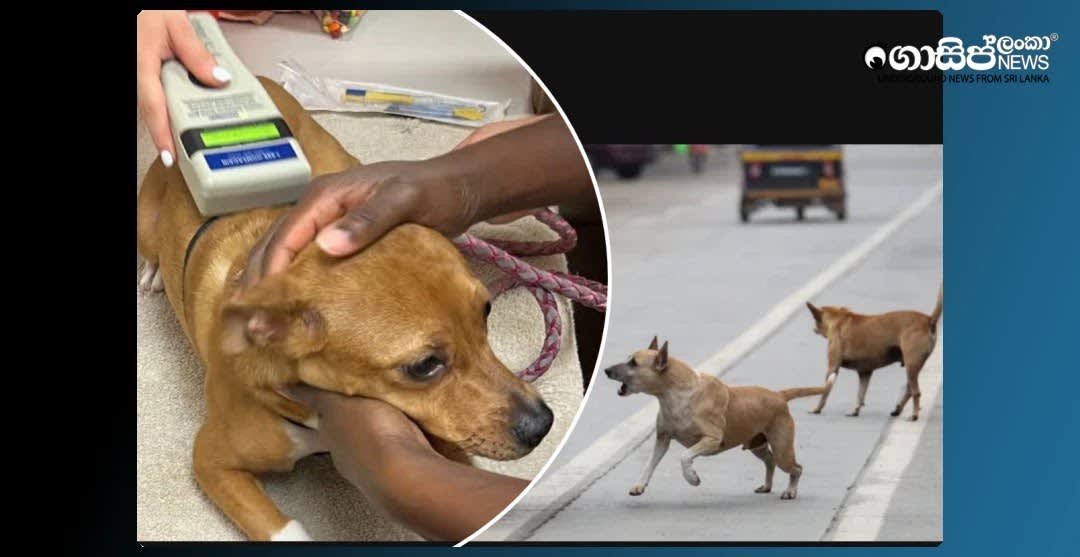
The increasing street dog population in various parts of the country, including popular tourist cities like Galle, has been a serious problem for some time. The lack of a proper system for maintaining accurate population data and health statuses has made managing this situation a significant challenge for authorities until now.
This is the new microchip implantation program introduced by the Veterinary Association for Humane Management of Animal Populations, targeting street dogs in Sri Lanka. Dr. Chamith Nanayakkara, a consultant at the association, stated that this method, currently being piloted on a small scale, is expected to be implemented island-wide in the future.
As an initial phase of this project, the Homagama Divisional Council has already commenced a microchip implantation program for street dogs within its jurisdiction, through which information about each animal is collected and maintained.
In this method, a small microchip containing a unique identification number is implanted under the skin of the animal's neck without any major surgery. Using these high-quality chips imported through a local company and the necessary equipment, the cost per animal is approximately Rs. 500. After implantation, animal records can be easily retrieved from the relevant database using a special reader.
As Dr. Nanayakkara points out, this secure database contains a wealth of important information such as the animal's breed, vaccination history, health information, owner's details, and place of residence. There are many practical benefits. If a dog bites a person, doctors can easily check the animal's vaccination and health background to determine the appropriate medical treatment for the affected individual. Furthermore, since accurate records of previous treatments for animals are available, unnecessary repeated vaccinations and treatments are completely avoided. In addition, this technology greatly facilitates the return of lost dogs found in various areas to their owners, even if they are in different regions.
However, it is also important to recognize the limitations of this technology. These microchips are not GPS tracking devices, so authorities cannot monitor animal movements in real-time. As they do not have batteries or signal transmission capabilities, information can only be retrieved by physically catching the animal and scanning it with a special reader.
While this modern step to control the street dog population is being implemented, a special program for dog vaccination and registration was also recently held at the Hatton-Dickoya Urban Council Hall, under a separate initiative to eradicate rabies.




Loading comments…